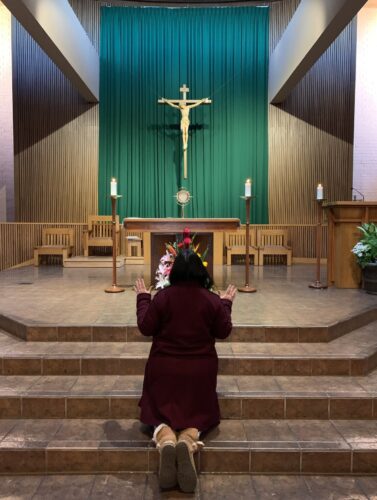
A Mother’s Role

Every Mother’s Calling

Every one of us has a mother. And as mothers, our role in life is to pray for our children and pour ourselves into nurturing them — not equally, but specifically. Not the same, but faithfully.

The Myth of Loving Them the Same

There is a phrase that has never quite sat right: “I love all my children the same.” The truth is, loving children the same is simply not possible — because each child is uniquely and irreplaceably different. To love them well means to love them as they actually are, not as a matched set.

A Daughter Who Needed Structure

From the moment God gifted us with our children, it was clear just how different they truly were. Our son is easygoing, laid-back, and steady. Our daughter is more complex — deeper in ways that required more of us. Because of that, the boundaries set for her were a little stricter, not out of favoritism, but out of protection. She needed that structure, and it served her well. She is the most organized person known to us — and she did not get that from her mother. Without any exaggeration, she is a beautiful example of what a nurturing mother is meant to be.

A Son Who Kept Us on Our Knees

Our son had a natural gift for finding the edge of every boundary set before him. It required constant adaptation, steady patience, and more than a little creativity. He kept the family on its knees — and that was probably exactly where God wanted us all along.

Molded by Grace

Through every bump along the way, God’s hand was at work — quietly, faithfully molding our son into the wonderful man he has become.
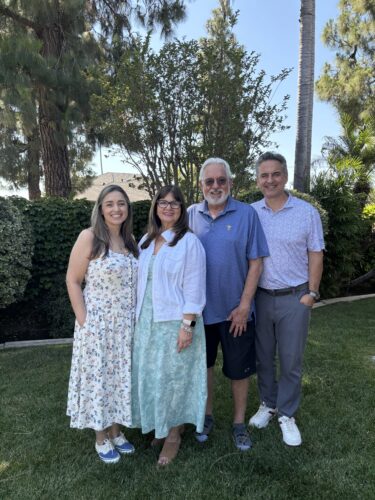
The original family: Sonja, me, Mike and Mikos

United, Imperfect, and Never Giving Up

Nobody Was Perfect — And That Was Okay

Neither of the children was perfect. But then again, neither were the parents. What never wavered, through every disagreement and difficult season, was the commitment to discipline. That held.

A United Front

As parents, there were fights. Disagreements. Back-and-forth conversations that seemed to go in circles. But eventually, a consensus was always found — and the most important lesson learned along the way was this: a united front is not optional. It is the foundation children need to stand on. That unity was not strategy. It was love made visible.

The Example Set Before Us

The thought of everything a mother had to carry as a single parent is humbling. She had seven children — and what she accomplished with them was nothing short of extraordinary. A father who was rarely present. In the first five years of the marriage, five children arrived — one each year.

Clotheslines and Contentment

By the time the sixth child came along, there was a three-year gap — and another three before the youngest arrived. Looking back now, it is impossible not to marvel. The meal planning alone. The mounds and mounds of laundry washed and hung — not on a dryer, but on clotheslines, because that was all there was. Her life was not easy. But the children never knew they were lacking, because she taught them to be grateful for exactly what they had.


Heroes Without Capes

The Sacrifices

An early memory stands out clearly: being taken by mother on a Greyhound bus to see a specialist in San Diego for amblyopia in the right eye. At five years old, surgery was arranged — and she stayed at the hospital the entire time. Special sunglasses were prescribed afterward, but a brother accidentally sat on them the following week. They were never replaced. The trip back to San Diego was simply too much of a hardship. That was the end of it — quietly accepted, never complained about.

What Single Mothers Carry

Every single mother deserves to be seen for what she actually carries. What our mother did — and what so many single working mothers do every day — is nothing short of heroic. They are the unsung heroes of the world.

A Decent Woman

Our mother was in her late thirties when our father checked out. She never dated — not because she had no options, but because she understood her role as an example to her children, especially her daughters. She was decent in every sense of the word, and she wanted her children to follow suit. That standard was not spoken as a rule. It was lived as a witness.

Honor Her Anyway

A Command, Not a Suggestion

The Fifth Commandment is clear: “Honor your father and your mother.” Some mothers are not easy to honor — let alone love. Yet this is the only commandment that comes with a promise. God did not attach conditions to it. He gave it as a command.

Why Honor a Flawed Mother?

Every mother is human. Some never had a good role model themselves. Some were ill-equipped to love the way a mother should. None of that changes what God requires.

It does not matter what kind of background a mother came from, or how deeply she may have caused hurt. God is not offering a suggestion. He is issuing a command — and He meant it.

What Honor Actually Means

The word honor means high respect and great esteem. At the very least, she gave life. And for that alone, gratitude is owed.

Even when the relationship is painful or strained, the call is to keep trying. Choosing to honor a mother is not just an act of obedience — it is the practice of one of the greatest values life has to offer. Because if love cannot be extended to the one who gave life, something in love itself will always remain incomplete.

Why God Made It a Commandment

There is nothing greater than a mother’s love for her child. And yet God knew parents would fall short. He knew honoring them would not always come easily. He commanded it anyway — precisely because He knew.

Even a mother who is broken, difficult, or deeply flawed still deserves to be honored. Not because she earned it. Because God said so.

The Fifth Commandment in the Bible states to “honor your father and your mother.” Some moms are not the greatest of mothers and are difficult to honor, let alone love. This is the only commandment that comes with a promise.

Mother’s Day

This Mother’s Day was truly wonderful.

Mike made the most incredible prime rib — perfectly complemented by baked potatoes and green beans. Jenny brought her famous salad, and Sonja baked the most delicious lemon cake. But the best part of all was simply having the entire family together under one roof. Nothing gladdens a mother’s heart quite like peace in the family.
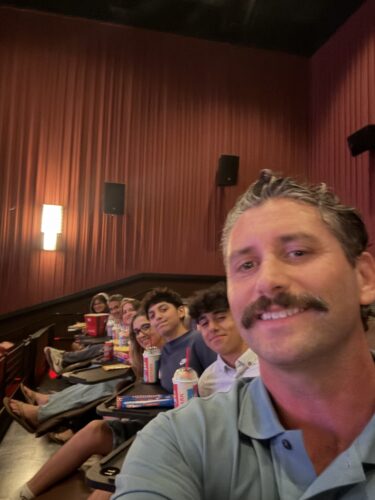
That’s us taking up ten seats
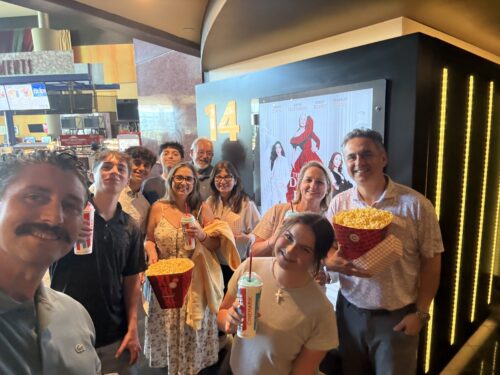
Junk food in hand, we’re ready!

And I have to say — all the help cleaning up the kitchen afterward was its own kind of gift.

Prayer

After Mass, between catnaps, prayer carried me through the entire day. There was something beautiful about lifting the whole celebration up to the Lord and trusting Him with it. We had planned to eat early since everyone had tickets to see The Devil Wears Prada 2 later that evening. The movie was surprisingly entertaining — but the best part, without question, was simply being together.

My Prayer

Dear Lord, I pray for all mothers today. Help us to follow the example of the greatest role model we have ever been given — Mother Mary. Please bless every mother, especially those who are estranged from their children. Jesus, bring unity to all hurting families. Amen.

 

Continue Reading

Tutorial On The Body of Christ


St. Teresa of Calcutta

This story is for those seeking a deeper understanding of the Eucharist.

A Lesson From a Little Nun

The Quote That Started It All

St. Teresa of Calcutta once told a priest that the saddest thing in the world was to watch people receive the Blessed Sacrament irreverently — speaking not of how, but of the disposition of the heart.

The Memory

That reflection came rushing back — standing inside Notre Dame Cathedral in Paris during Holy Mass. A nun from the Missionaries of Charity was helping distribute Holy Communion. Hands extended to receive, she gave them a firm tap — not gentle — and then lightly touched a cheek. The message was wordless and unmistakable: Our Lord was to be received on the tongue.

The Lesson That Took Years to Land

No second thought was given to it at the time. It was only recently — after making the personal decision to receive Holy Communion on the tongue — that the quiet lesson that little nun was teaching finally came into focus.

When Mike and I were newly married, we attended Mass at St. John Eudes in Chatsworth, California — a rare visit during a season when faith had taken a backseat. Yet one moment from that day never left: the overwhelming joy that came after receiving Communion. The sensation was profound and inexplicable. Without the spiritual maturity to understand what was truly happening, there was still something unmistakably real — because what was being received was the Body of Christ Himself.

For years, that memory lingered without a name. The joy was real, but its source remained a mystery. It was only in returning to the Catholic faith that the truth came into focus: what had been missing was not simply a feeling — it was the Eucharist. The living presence of Christ in the Blessed Sacrament.

The Novice Extraordinary Minister of Holy Communion

Called to Serve

Serving as an Extraordinary Minister of Holy Communion requires training — a brief formation in positioning, the proper words, and how to distribute reverently. It seemed straightforward enough. It was not.

The Weight of the Moment

The first time standing at the altar, inadequacy set in immediately. Every eye seemed fixed, every movement scrutinized. When a communicant approached with mouth open and tongue extended, fear took hold: What if her tongue is touched? What if the Host falls short? That anxiety proved prophetic. During the first week, a consecrated Host was dropped — and fell to the floor.

Grace in the Unexpected

Thank God, the woman picked it up immediately and consumed it herself. Mortification does not begin to describe it. The training had covered this: handle any dropped Host with reverence. But in that moment, the mind went blank. When it happened again, composure returned — the Host was carefully retrieved, held in hand, and after the remaining communicants were served, brought directly to the priest. He received it without a word, reverently consuming it himself.

The Lesson

One truth became clear early on: the reverence belongs to the Lord.

Sacred Responsibility

Six years later, the ministry continues — serving as an Extraordinary Minister of Holy Communion, week after week. With time, confidence has grown — not in technique, but in the weight of the sacred responsibility itself.

The parish serves both its community and an attached Catholic school, which means ministering multiple times each week, often to the youngest members of the flock. What once began in fear has become a privilege.

Not Again

Several years ago, while distributing Holy Communion to a student, a small particle of the Host fell to the floor. The heart raced — not from embarrassment this time, but from the full weight of what had just happened.

Eyes on the Floor

The Race of the Heart

There was no way to pick it up right then — the altar was packed with people, and the last thing anyone needed was a disruption during their communion with Christ. But the mind? Total chaos. What if someone steps on it? What if it disappears completely? Eyes stayed glued to that one spot on the floor for the next several minutes. A complete wreck.

The Search

After Mass, still hovering over that same area, Alan — one of the sacristans — walked over and asked what was going on. A quick explanation: a particle had fallen during distribution. The two of us got down and searched the floor together. Something small turned up, and in a moment of reverence — or maybe just looking way too hard — it went straight into the mouth, a genuflection followed, and that was that.

Something was immediately wrong.

The Horrible Truth

It did not dissolve like a Host. The texture was grainy, almost fibrous — like a fingernail. Or worse. Walking out of the church, stomach doing flips, the mystery object got quietly spit into a pocket for further investigation.

At home, the horrible truth came out: it was someone’s discarded toenail.

Transubstantiation

What the Church Actually Teaches

Transubstantiation is the heart of the Catholic faith: the bread and wine offered at Mass do not merely represent Christ — they become His Body and Blood. Truly. Completely. That is why receiving Communion at St. John Eudes carried such overwhelming joy. What was received was not a symbol. It was Christ Himself.

A Crisis Worth Knowing About

A 2019 Pew Research survey found that only 31% of Catholics in the United States believe the bread and wine actually become the Body and Blood of Jesus at Mass. That number has since been disputed — a Georgetown University study using more precise language found the figure closer to 64% — but even the most generous reading reveals a crisis of faith at the very center of Catholic life. Far too many Catholics approach the altar without knowing who they are receiving.

The Truth Is the Same Either Way

Whether the number is 31% or 64%, the doctrine does not change. What happens at every Mass — on every altar, in every nation, in every age — is what Christ Himself promised at the Last Supper and in the sixth chapter of John’s Gospel. This is not a symbol. This is not a memorial. This is the living Lord.

The Reverence

What the Church Requires

After those early mishaps, a deeper look into the proper protocol was in order — not just to be better prepared, but to understand why the Church treats even a crumb of the consecrated Host with such gravity.

The Protocol

The General Instruction of the Roman Missal and related Church directives are clear:

  • The priest and any Extraordinary Minister of Holy Communion must remain extremely alert during the distribution of Holy Communion — ensuring each recipient consumes the sacred Host immediately, and retrieving it at once if anything goes wrong.

  • When receiving Holy Communion, the communicant should extend the tongue sufficiently so the Host can be placed on it securely — or form a proper cup with both hands. The communicant should then step aside, still facing the altar, and consume the Host before returning to the pew. That practice had become second nature even before knowing it was part of the official rubrics.

  • If a Host — or even a particle — falls to the floor, it should be retrieved and brought to the priest at the appropriate moment, such as when the vessels are being purified after Communion. An Extraordinary Minister of Holy Communion may also consume the Host if it has fallen.

What Happens When a Host Cannot Be Consumed

Here is what proved most striking: if a Host has fallen and is too soiled to be consumed reverently, it is to be placed in water and allowed to dissolve completely. The process of dissolving the Host in water may be used in special conditions, such as a partially consumed Host that may have fallen from a communicant’s mouth or a Host that was unintentionally dropped to a less than clean floor. Once dissolved, the water is poured into the sacrarium — a special sink in the sacristy whose drain does not feed into the sewer system, but disperses directly into the earth.

Nothing about the Eucharist is incidental. Not even the water.

My Prayer

Dear Lord, continue to shed Your light on this broken world. May Your Holy Spirit open the hearts of those who do not yet understand that it is truly Your Body, Blood, Soul, and Divinity present in the Eucharist. May we all fall on our knees in reverence before Your Holy Presence.

Amen.


Continue Reading

Peace In The Battlefield

In His presence

Run to Win: The Discipline of the Spiritual Life

Trials Are the Training Ground

Just as athletes train rigorously to achieve their goals, the Christian life demands spiritual discipline to triumph over life’s challenges. The trials faced along the way — illness, addiction, loss, financial hardship — are not signs of abandonment. They are opportunities for growth. They remind us of our dependence on God and of His unfailing presence, especially in the hardest moments.

Every Athlete Exercises Discipline

St. Paul puts it plainly:

“Do you not know that the runners in the stadium all run in the race, but only one wins the prize? Run so as to win. Every athlete exercises discipline in every way. They do it to win a perishable crown, but we an imperishable one.” — 1 Corinthians 9:24–25 (NABRE)

The standard is clear. An athlete does not train halfway. Neither should the pursuit of holiness.

Perseverance Builds What Comfort Cannot

Perseverance and faith are not optional accessories to the spiritual life — they are its backbone. In every trial, God is present: guiding, strengthening, and shaping. As faith deepens and trust grows, resilience follows. The soul that has been tested becomes better equipped to face what comes next.

Grace Is Enough

When strength runs out, grace steps in. In 2 Corinthians 12:9, the Lord tells Paul directly: “My grace is sufficient for you, for power is made perfect in weakness.” That promise was not only for Paul. It is for every soul who has ever felt too weak to continue — which is to say, all of us, at one point or another.

1 Corinthians 10:13   New American Bible (Revised Edition)


Continue Reading