
Transitioning Of The World


Charlie Kirk
This young man had a calling. On September 10th, 2025, Charlie Kirk was assassinated while engaging in one of his popular open debate events at Utah Valley University. He is survived by his wife, his two young children, and a praiseworthy legacy of communicating the Christian worldview to a secular culture.
Kirk was well known for engaging students and professors in conversations on a wide range of controversial issues. But he wanted to be known above all not as a political organizer or debater, but as a follower of Christ. Boldness is a gift — and it was his greatest asset. Just a few months before he was assassinated, Kirk said that upon his death, he would want to be remembered for his Christian faith.
The first encounter with his posts came in 2019 — alongside Candace Owens, the two of them seemed to take on the world together. When they parted ways, following Charlie Kirk continued. His voice never dimmed.
The Purpose
Writing this blog requires careful words — and honesty about the restraint it takes. So much is held back for fear of backlash. But the goal has always been singular: to win people over to Christ. Followers are the last concern. The Word of God is the first priority. Whether readers agree or disagree changes nothing. The truth will always be the guide — and that is more than enough.
The world is shifting towards God.
The night before Charlie Kirk was assassinated we were in Santa Barbara. We are currently planning a remodel, so we stay in our home; we have wifi but no television. So we go out for early dinners and go to bed. Unlike Mike, I like the quiet of the night and stay up late. I pray and then listen to Christian podcasts, also I scroll through Instagram or TikTok. On this particular evening I was enjoying listening to Charlie Kirk.
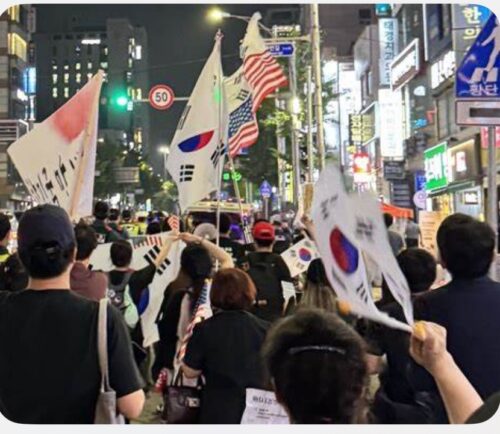
Everything Charlie Kirk spoke carried the ring of truth — words unctioned by the Holy Spirit. There is no better explanation for the force of his language, particularly on abortion and transgender issues. He never held back, because the truth was his guide.
Imagine moving from one college campus to the next, defending the unborn, meeting confused students head-on with Scripture. That kind of boldness can only come from being immersed in the Word of God. He knew exactly what he was up against — and he went anyway. The woke culture of American universities never deterred him. He was going to prove them wrong, and he did.
Gen Z
Who could be better positioned to lead this phone-addicted, searching generation back to solid ground? It is already happening. Gen Z has taken the reins — and they will make the difference. They will not be swept away by “every wind of doctrine” (Ephesians 4:14), because they understand what is at stake. Their future depends on it. God is their foundation.
This is the COVID generation — the group that endured the lockdowns, made unreasonable sacrifices, and emerged changed. Many of them grew up in a world of constant noise and shifting truths, and now they are hungry for something that doesn’t get reinvented every few years. There is a deep hunger for rootedness, for a moral framework that doesn’t bend to trends or feelings. The exposure of what that season truly was only sharpened their discernment.
Across campuses, social media, and parish pews, young people are quietly pushing back against the cultural noise and rediscovering what is true, ancient, and enduring. This movement will not announce itself with riots. There are no hired agitators to hijack the message, no mayhem waiting to overtake it — because this generation, too, will be led by Christ.
Come, Holy Spirit
Do you feel it? Something is shifting. An outpouring of the Holy Spirit is coming to this country — and Charlie Kirk’s martyrdom has ignited what will soon become a worldwide movement. The demonic ideologies that have gripped this culture will not go unanswered. The Holy Spirit is already hovering over the land, touching and transforming hardened hearts. Eyes that were closed will soon see the glory of God made manifest, and the truth will lead them — one by one — to the foot of the Cross.
These cries are being answered. This new wave of leading others to Christ is something to be part of, not merely witnessed from a distance. There is genuine excitement in the air. For once, the breath in the lungs feels like the Holy Spirit Himself.
My Commitment
This week marks five years of volunteering at St. Norbert Parish — teaching First Holy Communion and Confirmation classes. Seventy-three years old and still at it. God provides the stamina when the calling is clear, and this calling has never been clearer.
Volunteering gives life a purpose that nothing else quite replicates — especially when the work is shaping the minds and hearts of the young. Preparing these classes requires studying Scripture, sitting with the faith, and understanding it deeply enough to hand it on. That kind of preparation keeps the mind sharp and the heart ready to evangelize wherever the opportunity arises.
Stephen
In many ways, Charlie Kirk stands alongside Stephen from Acts, Chapters Six and Seven. People hated Stephen because he stood for God. His accusers were many — but that never changed his message. It only made him bolder, because he was filled with the Holy Spirit.
The parallel is striking:
And Stephen, full of grace and power, was performing great wonders and signs among the people. But some men from what was called the Synagogue of the Freedmen, including both Cyrenians and Alexandrians, and some from Cilicia and Asia, rose up and argued with Stephen. But they were unable to cope with his wisdom and the Spirit by whom he was speaking. Then they secretly induced men to say, “We have heard him speak blasphemous words against Moses and God.” — Acts 6:8–11 (NASB)
You cannot win an argument with someone filled with the Holy Spirit. The opposition to Stephen did not defeat him — it revealed him. The same is true of Charlie Kirk. The louder the accusation, the clearer the anointing.
Acts 6:15 New American Standard Bible
Stephen Before The Sanhedrin
The Sanhedrin
The Sanhedrin held final authority in matters of Jewish faith in biblical times — and they would do anything to stop the Gospel of Jesus Christ. They refused to accept Him as the Messiah. That refusal did not end with debate. It ended with blood.
Now when they heard this, they were infuriated, and they began gnashing their teeth at him. But he, being full of the Holy Spirit, looked intently into heaven and saw the glory of God, and Jesus standing at the right hand of God; and he said, “Behold, I see the heavens opened and the Son of Man standing at the right hand of God.” But they shouted with loud voices, and covered their ears and rushed at him with one mind. When they had driven him out of the city, they began stoning him; and the witnesses laid aside their cloaks at the feet of a young man named Saul. — Acts 7:54–58 (NASB)
Stephen died with his eyes fixed on heaven and the name of Christ on his lips. His killers stopped their ears so they would not have to hear the truth. That detail is not incidental — it is the oldest pattern in history. When the truth becomes unbearable, the response is never to answer it. It is to silence it.
And yet — the young man named Saul was watching.
My Prayer
Dear Lord, help us in this battle. Equip us with the full armor of God. Sharpen our spiritual swords and place Your words in our mouths. Strengthen us through Your Holy Word. Amen.
The Battle Against Evil


We are experiencing first hand the evil that has been unleashed in our country. I belong to a community of people who attend daily Mass. This past Tuesday was the first day for the students of St. Norbert to attend Mass.

In this particular church all the pews face the altar; during the entire service, unless some random noise disrupts the service, we have our backs to the main entrance. Is this going to keep me from attending daily Mass? Mass is what motivates me to continue the day in peace. No deranged animal will take this from me because fear is from the Devil.
What we as a country recently experienced in Minneapolis, Minnesota, can only be described as diabolical behavior.
Filling Your Mind With Godly Thoughts
Since I attend Mass daily, my day starts with receiving Holy Communion. Receiving the Body of Christ daily fuels me with His love and makes my day go better. Not every day is going to be filled with sunshine and the scent of fresh flowers; but, for me, without communion on a daily basis, I feel the void. Praying on a regular basis is the norm and listening to messages from likeminded people helps me attain peace. Certainly the struggle to serve God is always a challenge. I, for one, get distracted by the things of the world. Nevertheless, when I make an effort to sacrifice time to be with the Lord, I do get clear direction.
The Voice Of God
For some the voice of God is audible; for me it’s usually my conscience sorting out the bad so that good, solid decisions can be made.
Proverbs 3:5-6 New American Standard Bible
If we can make a connection with the mass shooters who have terrorized our schools, it is that they did not have God in their lives. Jillian Peterson, PhD, and James Densley, PhD, collaborated in a study and authored the book “The Violence Project.” With years of studies of mass shootings, they have developed a database to examine the shooters, their backgrounds, guns and motivation. According to this study, there are four commonalities in mass shootings:
- Childhood trauma, violence in the home, sexual assault and parental suicides;
- Crises weeks or months leading up to the shootings;
- Most mass shooters study and copy the actions of other shooters. They want notoriety for their heinous killings; and
- The shooters all had the means to carry out their murderous plans.
The Perpetrators
In most cases the perpetrators suffered from severe bullying. We know this because they shared the information via social media. Nearly all the shooters made threatening communications before carrying out their attacks. 93% of the attacks were pre-meditated; they had it in their hearts to kill and developed a plan to carry out their hatred. The perpetrators were aware that this was their final act because they, too, would either kill themselves or be killed by the police. These broken souls were determined to bring others down because they expressed their grievances through violence.
The Annunciation Attacker
This transgender man was obsessed with other similar shooters. The fact that he was transgender proves that he was confused about which gender God created him to be. After reading about all the hatred that this young man had we find a clear indication that he listened to the voices of many demons. These demons manifested themselves by encouraging him to commit this heinous act. The demons took over his altered mind. This animal heard the voice of Satan himself and no excuse can be made for his actions other than deep – seated hatred. Even though he transitioned, he was still unhappy and filled with rage.
The Rage
This type of rage caused an attack on the most vulnerable – innocent schoolchildren attending a Holy Mass. Nothing is more deplorable. This young man who wanted to be a woman was so filled with rage and acrimony that he took the lives of two beautiful children and wounded 17 others. He was living hell on earth, and now his soul may be burning in hell.
Side Effects Of Transgender Drugs
When you are transitioning, many drugs are prescribed to help your state of gender dysphoria. Furthermore these drugs have many side effects. Of the four drugs that I researched, the side effects were almost indistinguishable: discouragement, feeling empty, loss of interest or pleasure and thoughts of suicide. This entire transgender phenomenon is more than perplexing, it’s a paradox. In addition doctors who participate in this practice should be held accountable for the outcome of their patients. And do not let me get started with the parents because parents should be protecting their children, not feeding them to the wolves.
The Fight
We are all in this together. If we do not come together as a God-fearing country, nothing will change. We need to put aside all of our prejudices and fix this once and for all. I believe in the right to bear arms, but we need to come to a consensus as to how to improve the laws so that these mentally deranged individuals will never be allowed to purchase guns.
The Los Angeles Unified School District
Recently I attended a political meeting. It was not surprising when a woman, who works in the front office of a high school in this district shared this story. These men were sent from the district to install feminine hygiene dispensers in the men’s restroom! Do transgenders have a cycle? No, but this district is making sure that transgenders are not excluded. Your self-serving leaders will singlehandedly destroy our children by feeding into these lies.
My Prayer
Dear Heavenly Father, we will never stop praying! It is our prayer that these pleas rise to You as heavenly incense. We lift up all the students and parents from Annunciation Parish, especially for Fletcher and Harper. We know that they were martyred and are resting in Your Holy Arms. Comfort their parents and siblings and bring solace to this community.
Warning To Meddling Mothers

I was a meddling mother.

The Mandate
When our daughter Sonja was attending Pepperdine University, she came to visit us in Santa Barbara. She had met a young man from Malibu and was eager for us to meet her new boyfriend. Our beautiful daughter walked in with this stranger — tattooed from head to toe, with piercings in his nose, eyebrows, tongue, and ears. He wore a heavy chain attached to his wallet, and bell bottoms wide enough to qualify as a small tent. The experience left visible scars.
From that day forward, a sense of maternal urgency set in — a self-declared mandate to find Sonja a husband. This mission, however noble in motive, would get me into a great deal of trouble.
The Interview
Years later, Mike and I found ourselves at the St. Regis, a swanky Dana Point resort, attending a wedding. Rather than simply enjoying the celebration, the mission resumed. Purposely sitting next to a young, tall, handsome man in his thirties who seemed like a promising prospect, the plan was set. Sonja was called and invited to the reception.
The sound of her voice threw everything off. “You want me to crash a wedding to meet a stranger?!” Dead silence followed. She was livid.
That didn’t slow things down one bit — if anything, it was motivation to try harder.
God’s Help
The mission was far from over. On a missionary trip to the Czech Republic, a priest was tracked down specifically to receive one prayer request: find the right husband for Sonja. This was not an isolated incident. Wherever travel took the family — another city, another country — that prayer request went with it.
The operation had also expanded. Mike was recruited into the effort, and arrangements were made for a blind date with one of his younger golfing buddies. It was, by every honest measure, the biggest disaster ever.
And still — not a single lesson was learned. The meddling continued, diligent and undeterred.
Genesis 2:18 New American Bible (Revised Edition)
Second Wedding
There is no gentle way to open this chapter. What happened at the second wedding was, by any honest accounting, a step too far — but it did not stop me from interfering.
The scheme unfolded like this: a young man’s phone number was retrieved from Sonja’s cell phone bill. I placed the call and the opening line involved a dog with a hip problem — a creative fiction designed to reach a physical therapist with plausible cover. Once the conversation was established, it pivoted smoothly to the real agenda: how were things progressing between this young man and Sonja?
The young man, understandably, never called Sonja again.
Sonja found out. She was furious. And somehow, in the moment, the fury was genuinely puzzling. The intention, after all, was only to help.
2 Corinthians 6:14 New American Bible (Revised Edition)
The Message From God
The meddling continued — until it didn’t.
While traveling in the Holy Land, God stepped in. Not with a lecture. Not with a rebuke delivered through another person. With a dream — quiet, precise, and devastating in its clarity.
In the dream, Sonja was being fitted for her wedding dress. She stood on a riser in a bridal shop, radiant and happy. From the background, unseen, I watched — glad to witness the joy without being the cause of it. The dress was extraordinary. The bottom especially: intricate beading, beautiful detailing, the kind of craftsmanship that takes time and cannot be rushed.
When Sonja and the seamstress stepped out, I entered the room. Needle and thread in hand. And began to hem the dress.
Footsteps returned. A quick retreat into hiding.
Then Sonja’s voice — not angry, but broken: “Who would do this terrible thing? The most beautiful part of my dress is missing.”
The dreamer woke up in tears. And prayed for forgiveness.
Minding My Own Business
The dream did not fade with morning. It landed — and it changed everything.
Looking back honestly at the years of scheming — the priest in the Czech Republic, the St. Regis scouting mission, the golfing buddy disaster, the phone call with the fictional hip problem — one word surfaced to describe it all: witchcraft. Not in the dramatic sense, but in the truest sense. Not spells or incantations, but something just as spiritually disordered: attempting to bend reality to a desired outcome through means that bypassed genuine trust in God. The prayers had not been prayers of surrender. They had been prayers of instruction. God was not being invited to work in Sonja’s life. He was being lobbied — given specific assignments, pressed for particular results, recruited into a plan that had already been decided.
God, mercifully, set the record straight.
The young man from Malibu turned out to be a sweet gentleman, but remember this was almost 25 years ago when piercings and tattoos were still frowned upon. I promise I will have nothing negative to say about people who choose to express themselves with tattoos but back then it was taboo.
Russ to the Rescue
The mission came to an end — not because the strategy finally worked, but because God did what He had always planned to do, entirely without assistance.
It happened at the annual Tamale Party. Sonja walked in with Russ.
The first impression was not promising. The judgmental eye that had already survived tattoos, piercings, bell bottoms, and a golfing buddy catastrophe now landed on Russ — and found his hair too long. Some habits, it seems, die slowly.
After a few dates, Sonja invited Russ over for breakfast. Seated across from him, the question came out — sarcastic, pointed, and barely disguised as small talk: “So, do you even go to church?”
Russ looked up. “I’m Catholic.”
The interior reaction was immediate and total. Harps. Trumpets. A choir of angels. I knew, in an instant, that this was the man God had chosen for her daughter. And I had absolutely nothing to do with it.
Russ fit the family perfectly. He is loved dearly — and rightly so.
My Prayer
Prayer for unmarried children: Heavenly Father, I know You have a perfect plan for our sons’ and daughters’ future. I am asking that You bring the right person into their lives who is going to care and love them for who they are. Lord, You are in control of their lives. All I’m asking is that they find the right helpmate and that this marriage be sanctified by You. Amen!
Mothers of the world, this is not your burden to carry.
The choosing belongs to God — and it always has. Long before a mother ever laid eyes on a tattooed young man from Malibu, or scanned a resort wedding reception for viable candidates, or dialed a physical therapist under the cover of a dog with a hip problem, God already knew. He already had a plan. He already had a person.