
Lan, An Immigrant Story
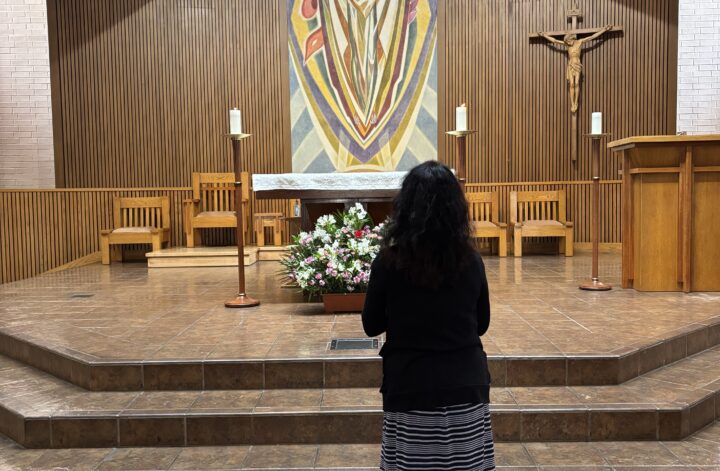
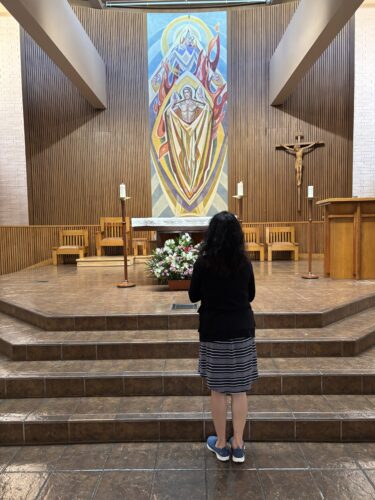
This is the story of a remarkable woman — a dear friend named Lan.
Lan
Lan was born in Hà Nội, North Vietnam. She is now 75 years old. When she was five, her family fled south to escape the grip of communism — a decision that would shape the entire course of her life.
Her husband was already serving in the army when they married. By the time North Vietnam invaded the South, the couple had two daughters. Her husband was captured and taken to what the communist regime called a re-education camp — though in truth, it was a concentration camp in every meaningful sense. Families were told the detainment would last eight days. He would not be released for six years.
During that time, South Vietnamese soldiers held in these camps were subjected to indoctrination — forced to sing songs of worship and tribute to Hồ Chí Minh.
Visits were not open. They were scheduled. Lan’s husband would write to inform her when she was permitted to make the journey.
The Visits
To reach her husband, Lan and a group of other wives would board a bus and travel eighteen hours to the edge of a jungle. There, they hired motorcyclists to carry them deeper into the forest. At a certain point, even those guides would go no further — the fear of communist soldiers was too great. From there, Lan and the other wives carried their supplies the rest of the way themselves.
By the time she finally reached her husband, a day and a half had passed since she left home.
The Meeting
The visiting room held a long table — perhaps eight feet across. When her husband was brought out, the distance between them allowed only the reaching of hands. A communist guard stood watch over the entire conversation. After fifteen minutes, the visit was over.
As desperately as Lan wanted to cry, she had been warned against it. If any of the wives wept, the men would be punished with more intense labor. So she held it in.
Homecoming
There was no announcement. No formal notice. One day, after six years in the re-education camp, her husband simply came home. He was required to report to the local police once a week.
The Exodus
Leaving a communist country required an underground network — secrecy, risk, and the willingness to pay dearly for the chance at freedom. In Lan’s case, the currency was gold — specifically, gold leaves, a form of payment used in that time and place. The price was three gold leaves per person.
By then, Lan and her husband had welcomed a third child — a son, still a newborn. They paid the price and they prayed. Then they waited. A full year passed before word came that their passage out of Vietnam was available.
Lan’s daughters were eight and six years old when the family departed. But their newborn son could not come. The journey was too dangerous — those who fled communist Vietnam became known as “the boat people,” and the passage carried enormous risk. The fear was real and specific: an infant’s cry could betray them all. The baby stayed behind, left in the care of Lan’s parents.
The Boat
They boarded a bus and were transported to the shore. There, a tiny fishing boat — loaded with fifty people — set out onto the dark waters of the South China Sea.
It was not long before a devastating discovery was made: the compass was broken. With no instruments to guide them, they turned to the night sky, navigating by the North Star.
By the fifth day, the boat was sinking. The men worked through the night, bailing water with everything they had — but it was not enough. By seven o’clock in the morning, they were exhausted, their strength spent. There was nothing left to give.
And so, together — Catholics and Buddhists alike — they prayed. They prayed for their souls. They prepared to die.
Then, a young man on the boat spotted something — a small speck against the sky. An airplane. Desperate, they tried to start a fire to signal it, but everything on the boat was soaked. It seemed the last chance was slipping away — until the captain’s wife remembered she had a mirror. They caught the light and flashed it toward the sky.
Proverbs 3:5-6 New American Bible (Revised Edition)

Two soldiers reached the sinking boat by dinghy and asked if they needed help. They were rescued — women and children first, then the men.
From Sea to Shore
The USS Bainbridge transported them to a refugee camp in Singapore. What followed was neither quick nor simple. To gain approval for residency in the United States, Lan and her family were scrutinized before a Singaporean judge. Under penalty of perjury, they were required to swear that every piece of information they had provided was true — a grueling process in every sense of the word. They were also interviewed by U.S. officers and were ultimately sponsored by a Catholic organization and the UNHCR — the United Nations High Commissioner for Refugees — an organization that has spent more than seventy years working to protect and advocate for people forced to flee war, persecution, and violence.
Lan and her family remained in Singapore for three months, preparing for the life ahead. The next five months were spent in the Philippines, where a series of orientation programs helped them acclimate to what life in the United States would require of them.
The Payback
Lan and her family signed loan documents to cover the cost of their airline tickets to the United States — a debt they fully intended to repay.
As legal refugees, they received assistance through a government program: a stipend of five hundred dollars a month, plus food stamps, for a maximum of eighteen months. Lan’s family was out of the program in thirteen — because her husband found employment. He took the graveyard shift so he could send money back home, working steadily toward the goal of bringing their son to the United States.
Though Lan had three years of law school and an accounting degree, the language barrier closed every door she tried to open. Unable to find work in her trained field, she took out a loan and became a cosmetologist. She worked in that profession for three years — and then felt something stronger pulling at her. A calling to social services. For twenty-three years, she served the Social Services Agency of Orange County, giving back to people in need.
Lan and her husband paid back every penny of those airline tickets. Five years after their arrival, she and her family became American citizens.
Mark 11:24 New American Bible (Revised Edition)
Her Children
It took eight years for Lan’s son to be sponsored into the United States. She remembers the tears and the nightmares — the weight of being separated from him for so long. He is now grown, an engineer with a family of his own. Her oldest daughter works for the government, and her younger daughter is a pharmacist.
The Patriot
Despite extraordinary duress and persecution, Lan and her family entered this country legally. They never took advantage of the system. She is a true patriot who loves her country.
There is a genuine and important distinction between lawful protest — which is a cherished freedom in this country — and the destruction of property, looting of businesses, and burning of the American flag. The first is a right worth defending. The second is a crime. Whatever one’s grievance, violence and destruction do not advance justice; they obscure it. And those who exploit peaceful demonstrations to incite chaos — whether driven by radical ideology or simple opportunism — do a profound disservice to everyone who genuinely seeks change through legitimate means.
On the question of immigration reform, it is worth noting where the faith and good civic reasoning converge. Nations have a responsibility to regulate their borders and establish a just and orderly immigration system for the sake of the common good. That is not a controversial position — it is the Church’s own. The U.S. Catholic Bishops accept the legitimate role of the U.S. government in enforcing immigration laws; however, the USCCB opposes “enforcement only” immigration policies and supports instead comprehensive immigration reform which includes an enforcement component.
My input — to begin with those who have lived here the longest, vetting them and offering a path to citizenship — aligns meaningfully with what the Church has long proposed. A significant majority of the undocumented population has lived in the United States for over a decade, and this population already contributes an estimated $100 billion in federal, state, and local taxes each year. Providing legal processes for long-time residents and other undocumented immigrants to regularize their status would strengthen the American economy, provide stability to communities, and keep families together.
A Shared Foundation
Lan and I met at daily Mass — and it is there that our love for God and country finds its common root. Together we teach First Holy Communion classes. We pray for our families and for peace to reign on this hallowed ground.
My Prayer
Dear Lord, I pray for Lan and all that she endured to become a United States citizen. Every sacrifice was made in prayer, and her faith in You kept her focused through it all. She wanted to live in a land free from communism — and through much prayer, she continues to thank You, Lord, for bringing her and her family safely here.
Amen.