
Me Vs. AI
Me vs. AI: Record-Breaking Heat and Mother Nature’s Beauty (The title could also read: Me Against Goliath.)
The Experiment
After completing the research for my last blog, a friend suggested trying AI. A quick Google search returned an overwhelming number of options — so the third one down the list seemed as good a place to start as any. Copying and pasting my blog to their site was effortless, but what happened next was nothing short of astonishing. The transformation took place in seconds. Before my eyes had fully adjusted to the screen, the work was already done — my entire piece rewritten in less than a minute.
The first thought that came to mind: Wow. This is unbelievable.
But when the blog was read back, it was polished. Nearly perfect. Reading the new words over and over made it feel like they were always mine. Pride swelled — not the quiet kind.
When it was read aloud to Mike, he went straight to the point: “You don’t need an editor. Use AI.”
The Secret
A conscious decision was made: tell no one.
The daily Bible verse shared in the video — the one reminding everyone to read the blog — made no mention of any change. Not a word to the audience. Not a word to the editor.
When the review session came, there was almost nothing to correct. A deleted comma here and there, but nothing significant. And yet, the whole time, a quiet weight was building — the dread of what had to come next.
Dear Lord, I can’t do this to her. She’s a personal friend. How — how, Lord — am I going to tell her?
The title could also read: me against Goliath.
The Bubble Burst
Still somewhere high in the atmosphere, a text message arrived from son Mikos: “Did you use AI?”
The reply: “Why?”
Like a balloon punctured mid-air, the ego came crashing down. Will others know? Dear Lord, what doors have I opened?
Later that week, confidants Jo, Helen, and Sarah were called and asked to read the blog. Their verdict was immediate — these weren’t the usual words. Not the familiar style. Guilt moved in and made itself at home.
Dinner
Over an enchilada dinner with the family, Mikos was asked what he really thought.
“Well, Mom — are you perfect? Because the writing was too perfect.”
In the silence of the mind: Pretty near perfect. A laugh covered the rest.
Then Sonja offered her two cents: “You can use AI, but you need to guide it with your own words.”
Another silent reply: Really? It was through the grace of God that any of this happened at all.
Proverbs 3:6 New American Bible (Revised Edition)
Ephesians 1:11 New American Bible (Revised Edition)
Record-Breaking Heat
In 2025, the entire month of March was what we love about our state — the weather was in the mid-70s. Not this year! This year we are walking in sandals, putting on sunscreen, and running our air conditioners!
Belen De Leon (local Los Angeles meteorologist) said the current high-pressure system is extending very high into the atmosphere, “more like something you’d see in the middle of the summer.”
“[The high-pressure system] is very tall. So, the taller and the stronger that high pressure system is, the more air it pushes down,” she said. “And, when air sinks, it warms and it compresses. When that air compresses, it heats up. Plus, we’ve got clear skies, wall-to-wall sunshine — that’s what causes the temperatures to climb so quickly during the day.”
De Leon said the biggest issue with this system is that it’s not budging.
By Monica Garske
The Upside of Scorching Heat: Roses and Hummingbirds
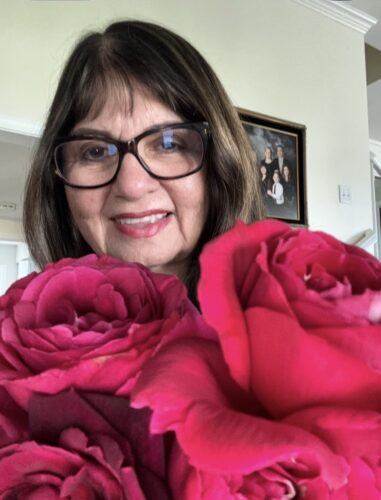
Every morning I wake up to more roses! So many that I’m running low on vases! Honestly, it’s like summer — a bumper crop of beautiful blooms.
Mike is using a new, environmentally safe treatment to protect them from aphids and all the other pests that attack our roses.
Roses for the Blessed Mother Mary
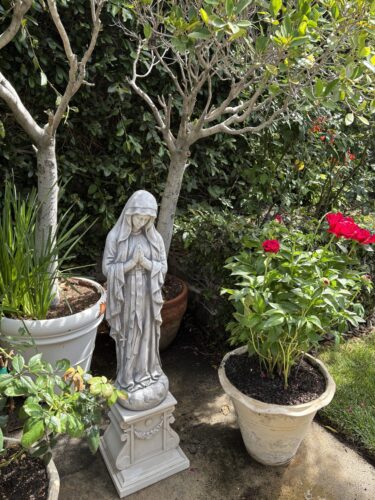
Our Blessed Mother Mary loves roses, and in many of her apparitions she appears with them. I, too, am a rose lover — nothing can compare to the scent of a rose. When the scent of roses fills a room, it gives us a glimpse of what heaven has in store.
Although I was not born with a green thumb, I repurpose all my banana peels and eggshells. If it’s late at night, I toss the banana peels into a flower pot. The next morning, Mike discovers that I missed by a long shot — the peels landed on the concrete instead.
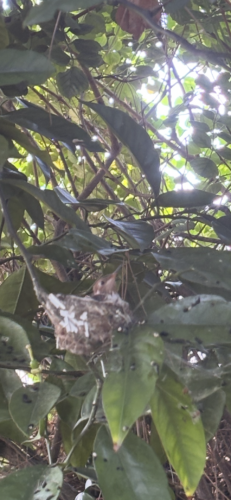
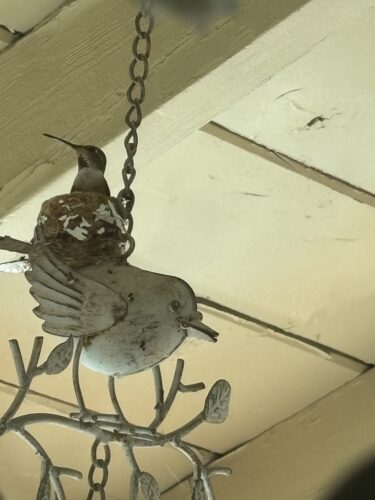
I microwave and crush the eggshells, then scatter them throughout my garden. Last week, I wanted to make sure my orange tree received some nourishing eggshells. As I bent down to scatter them, I made eye contact with the most beautiful nesting hummingbird. We respectfully greeted each other, and I asked the tiny feathered creature if I could take her photo. She graciously agreed.
My yard is a quiet sanctuary for hummingbirds. This will be the third year that the same hummingbird returns to the nest outside my kitchen’s Dutch doors. My cat Prudie is too up in years to attempt catching anything that moves, so it’s a safe haven.
The Eggshells
After examining the photos of both nests, I noticed that the hummingbirds actually used the recycled eggshells I had scattered in the garden! Is it possible that Mother Nature in all her glory allowed me to be part of the nest-building process? Nonetheless, I am happy to contribute.
My Prayer
Dear Lord, in Jeremiah 29:11, Your word says that You have a plan for me. I thank You for opening my spirit to truth and redirecting my path.
The Egg Shells
After examining the photos of both nests, the humming birds use the recycled egg shells that I scattered in the garden! Is it possible that Mother Nature in all her glory allowed me to be part of the nest building process? Nonetheless I am happy to contribute.
My Prayer
Dear Lord, in Jeremiah 29: 11, Your word says that you have a plan for me. I thank You for opening my spirit to truth and redirecting my path.
You are the center of our world, and, as imperfect as it is today, Your Word tells me that You are in control (Psalm 103:19). I pray for all the ungodly disruptions we are currently enduring. Be with all those who are fighting for our freedom, and bring them safely back home. Lord, I pray for an end to this war.
Let Your peace prevail. Amen.
God is good, and so is my editor! May we be blessed with cooler weather, and do take time to smell the roses.
A Lenten Reflection
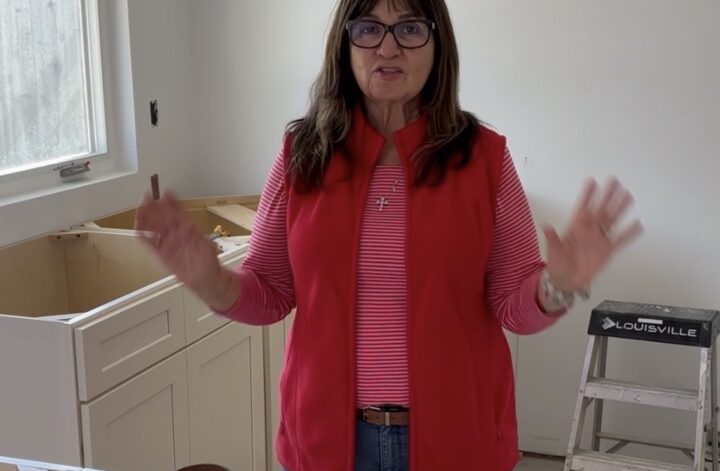
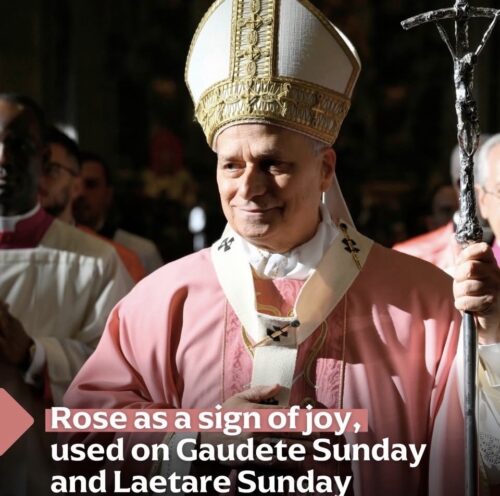
A Lenten Season Reflection: From Filet-O-Fish to Faith and Renovations
Welcome back to the blog! This week, I’m diving into a mix of personal stories, food adventures, and the spiritual journey of Lent. We’ll talk about the humble origins of the Filet-O-Fish sandwich, some recent fast-food escapades (both wins and disappointments), a little about the quirks of Southern California road trips, and a heartfelt update on my Lenten experience and home renovation challenges in Santa Barbara. So, pour yourself a cup of coffee and join me for a stroll through memory lane, a few culinary detours, and reflections on faith.
The Filet-O-Fish: More Than Just a Sandwich
Did you know the Filet-O-Fish sandwich dates back to 1962? I was ten when it came onto the scene, thanks to Lou Groen, a McDonald’s franchise owner in Cincinnati, Ohio. Here’s the story: His neighborhood was overwhelmingly Catholic—about 87%—so during Lent, when many abstain from meat, his Fridays were rough. Profits during that season dipped to around $75 a day. Being Catholic himself, Lou saw the problem firsthand and pitched a fish sandwich to Ray Kroc, McDonald’s CEO. Kroc wasn’t convinced at first and instead pushed another idea—the Hula Burger, a grilled pineapple and cheese sandwich. They decided on a contest: whichever sandwich sold better would make it to the menu. The Filet-O-Fish won, and the rest is fast-food history, with the sandwich officially joining the permanent menu in 1965.
The Filet-O-Fish has been my go-to over the years, especially during Lent. But, let me tell you, my recent experiences haven’t exactly been legendary. One afternoon, I suggested we grab a Filet-O-Fish for lunch. Sounds simple, right? Not when you have to wrestle with the McDonald’s app first. We ended up spending $21 for two sandwiches, which is a bit rich for fast food, only to find the sandwich disappointingly dry and light on tartar sauce—the true star of the show. We tried again last Friday, armed with the app and a clear plan, paying $2.99 each. This time, the sandwich was still missing that saucy sparkle I remember, lingering as a dry reminder that nostalgia doesn’t always match reality.
Fast Food Redemption on the Road
On a brighter note, our frequent trips to Santa Barbara have introduced us to some new favorites — Mesa Cafe for breakfast, where the generous portions keep us fueled for hours, is a standout. But our day trips aren’t without their quirks, especially when you’re juggling charging your electric car with road trip hunger and bathroom breaks.
Our experience with LA gas stations taught us a tough lesson: don’t count on public restrooms there. Instead, we opt for stops at Agoura Hills/Calabasas off-ramps—easy on, easy off, with friendly amenities. Since we don’t usually buy gas, we make sure to grab something small because, well, you gotta honor the hospitality somehow. I told Mike, “I’m done paying $20 just to use the restroom,” so we stopped at McDonald’s instead, ordering two cheeseburgers to go. And guess what? Those burgers turned out to be pure joy—ketchup oozing out, juicy patties, the kind of food experience that can make a fast-food stop feel like a small victory. Though I had this joyous food experience, I’m done with Filet-O-Fish sandwiches, even for $2.99 on Fridays. It’s not worth another disappointment.
Lent 2026: Fish on the Menu
Speaking of Lent, plenty of fast-food chains recognize the season with fish-forward menus. Del Taco offers crispy, beer-battered and shrimp tacos, Chick-fil-A jumps in with their own fish sandwiches, and Arby’s recently rolled out a Cajun Fish sandwich alongside their usual fish options. It’s nice to see these choices expanding, making it easier for folks sticking to Lenten traditions to find something tasty on the go.
Closer to home, we regularly support St. Norbert’s parish fish fry on Fridays during Lent. It’s only $12, delicious, and serves a wonderful cause—raising funds for eighth graders heading to Washington, D.C. After dinner, the Stations of the Cross service at 7 p.m. is a peaceful, reflective way to end the day. Lent, in all its forms—from fast food specials to community fellowship—feels like a season during which the sacred and the everyday intersect.
My Lent Journey: Wrestling with Grace
Honestly, Lent hasn’t been all smooth sailing for me. Discipline and love have been a challenge, and when I stumble, my instinct is to be hard on myself, like punching the air with oversized gloves. But Lent is also a time for reflection—towards myself, and toward God’s patient guidance. I want to draw from the well of His mercy, let Him speak to my soul, and recognize when I’m off course.
More than being convicted of my shortcomings, I crave the peace of a clear conscience and a straightened path. Lent is a pilgrimage, and I want to feel ever more deeply the holy presence that walks beside me.
Update from Santa Barbara: Renovation Realities and New Dreams
We didn’t plan, really, to invest in a renovation project in our twilight years, but here we are. Our Santa Barbara home has been under construction since last August, but it’s been a slow and costly journey. Permits in this coastal city come with unique rules designed to protect the environment and architecture. Our windows, initially installed, didn’t pass inspection due to new codes requiring stronger protection against Pacific moisture, meaning they had to be redone.
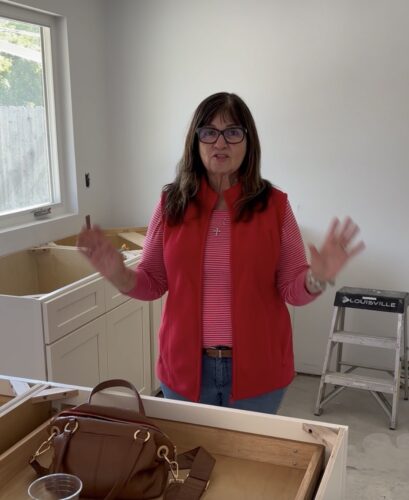

After a recent rainstorm, we discovered the roof needed replacement. Adding to this, plumbing and electrical systems required updating, none of which were in the original budget. Despite the delays and surprises, I have developed a new-found love for Santa Barbara. Though the atmosphere and wardrobe is relax and lay back, I like to dress up. But If all goes well, Mike and I plan to make it our home, God willing.
A Prayer for the Journey
I leave you with my prayer for this journey:
Dear Lord, thank You for loving us unconditionally. It doesn’t matter where we are in our walk or how imperfect we feel—You take us as we are and say, “Come to me, and I will give you rest.” Thank You for meeting me when I stray and redirecting me to Your path. Forgive my transgressions and let me enter Your holy chambers with a pure and contrite heart. Amen.
How’s your Lent shaping up? Whether smooth or stormy, remember you’re not walking this road alone. I look forward to sharing more stories, reflections, and maybe even some recipes next week. Until then, may your days be blessed and your sandwiches delightfully saucy. Maybe not so much the recipes – after all I’m still the Reluctant Chef!
Thirst No More
Happy International Women’s Day!
The Samaritan Woman
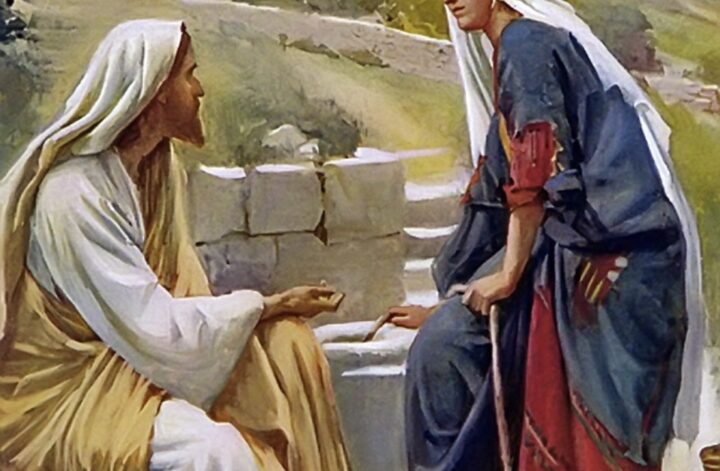
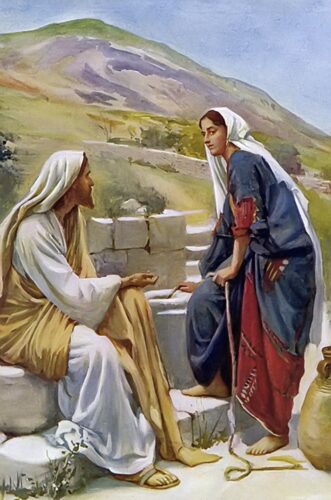
In John 4:5–42, Jesus meets a Samaritan woman at a well in the heat of the day. This was no ordinary encounter. Jews did not speak to Samaritans — and yet Jesus not only spoke to her, He asked her for a drink.
He already knew everything about her — the broken relationships, the searching, the sin. And still, He did not condemn her. He invited her.
He offered her living water — not the kind drawn from a well, but the kind that satisfies the deepest thirst of the human heart. She listened. She believed. And then she ran back to her village to tell everyone she met.
This woman — with all of her past — became one of the first evangelists. An entire town came to believe because of her witness.
On this International Women’s Day, that is worth sitting with. Jesus has always seen women — not as the world sees them, not defined by their past — but as souls worthy of the living water that leads to eternal life.
John 4:7-15 New Catholic Bible
7 When a Samaritan woman came to draw water, Jesus said to her, “Give me some water to drink.” 8 His disciples had gone into the town to purchase food. 9 The Samaritan woman said to him, “You are a Jew. How can you ask me, a Samaritan woman, for some water to drink?” (Jews do not share anything in common with Samaritans.) 10 Jesus replied,
“If you recognized the gift of God
and who it is that is asking you for something to drink,
you would have asked him
and he would have given you living water.”
11 “Sir,” the woman said, “you do not have a bucket, and the well is deep. Where can you get this living water? 12 Are you greater than our ancestor Jacob who gave us this well and drank from it himself along with his sons and his cattle?” 13 Jesus said to her,
“Everyone who drinks this water
will be thirsty again.
14 But whoever drinks the water that I will give him
will never be thirsty.
The water that I will give him
will become a spring of water within him
welling up to eternal life.”
15 The woman said to him, “Sir, give me this water so that I may not be thirsty and have to come here to draw water.”
Women
God gave us specific roles in life. Whether I wanted to accept it or not, my role as a young woman was being a wife and mother. The world was different 54 years ago — and like so many women of my generation, I wanted to be heard.
Searching for Direction
I have never dabbled in neo-paganism — otherwise known as witchcraft — or at least that is what I believed to be true at the time. But when I was attending college in the 1970s, we were bombarded with social issues on every side: the war in Vietnam, and the women’s movement, which was gaining momentum on college campuses. I found myself questioning my sense of womanhood.
The Women’s Movement
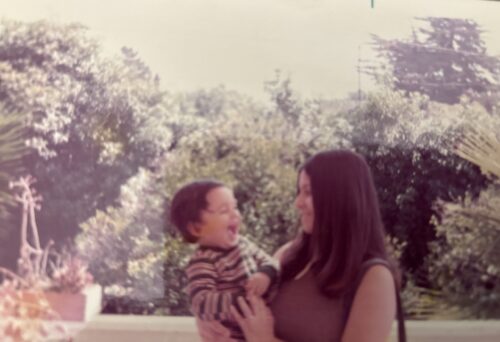
Getting caught up in the frenzy, one day I reached my breaking point — and I decided to leave. It was Susan B. Anthony Day. Believe me when I say that this was the bravest thing I had ever done as a young adult. Driving from Santa Barbara to Colton was terrifying. I rarely drove on freeways, and yet there I was — alone, with my baby boy, pushing through fear mile by mile. I know without a doubt that God had assigned His angels — His special agents — to get me and my baby boy safely to my mother’s home that day.
Me and my baby boy Mikos
Thank the good Lord that I married young. Though I was caught up in this movement for a hot minute, it was not conducive to my lifestyle. When I was 21, our son Mikos was born — and yet, even then, that rebellious spirit was still running through my blood.
The Connection
How do I make the connection between witchcraft and the current women’s movement? Well, it is not hard to see. Women who are involved in witchcraft are turning to crystals, calling on Mother Nature as their goddess, and embracing New Age beliefs — and in doing so, they are opening every door possible to welcome dark, evil spirits into their lives.
The Devil does not need much. He waits for the opportunity, and then — like the snake in Genesis — he slithers in. Do these women realize they are opening these doors? Some do it with full intention. Others innocently fall into the trap set by Satan. Either way, remember this: Satan loves it when we are in the dark.
Why do these women feel such a need for empowerment? Many are broken and angry. They blame men and what they call patriarchal rules. They turn away from Christianity because they struggle with the masculinity and the nature of God — and some go so far as to believe that God is a woman.
Thank the good Lord that I married very young. Though I was involved in this movement for a hot minute, it was not conducive to my lifestyle. You see, when I was 21 our son Mikos was born. But the rebellious spirit was still running through my blood.
The Connection
How do I make a connection with witchcraft and this current women’s movement? Well it’s not hard to see that women who are involved in witchcraft are turning to the use of crystals, calling on Mother Nature like their goddess. And New Age beliefs are all opening every door possible to welcome dark, evil spirits to enter into their lives. The Devil doesn’t need much, he waits for the opportunity and then, like the snake in Genesis, he slithers into their lives. Do these women realize that they are opening these doors? Some do it with intention, while others innocently fall into the trap set by Satan. Remember Satan loves it when we are in the dark.
Why do these women feel the need for empowerment? These women are broken, angry and blame men and their patriarchal rules. They turn away from Christianity because they have a problem with the masculinity and gender of God. And some go so far as to believe that God is a woman!
You Don’t Need A Man
The demasculating of men is very apparent in this movement, and it is slowly taking a toll on young men. This ideology is riddled with confusion — and sometimes young men simply do not know how to react. My advice to them is to seek out a well-grounded young woman who is serving God. And my advice to young women is this: if you want to be treated like a queen, treat a man like a king.
Stepping Into The Masculine Role
God created men to be the head of the household. When that is disrupted, it throws off the entire order — the role of a man, the stability of a family, the peace of a home.
I know this firsthand. My husband Mike wants nothing more than to take care of me and our family. Nothing pleases him more than fulfilling his role as husband and father. I need his protection, and I welcome everything he does for us.
Ephesians 5:23 New Catholic Bible
4 He must manage his own household well and ensure that his children are submissive and respectful in every way. 5 For if someone does not know how to manage his own family, how can he take care of the Church of God?
Falling Into The Trap
Satan is the father of lies — John 8:44 — and he deceives even the most elect — Matthew 24:24. We need to become the example God called us to be. Falling into the trap of deception will only lead to emptiness. We, as women, must step up and become completely whole. With Christ, there is no partiality between men and women. Once we come on board, the gifts set aside for us will be poured out — so abundantly that we will have more than enough to share with others.
The Gifts
I prayed for years about having a platform to share the Gospel — and the Lord gave me this blog. It came through a long, vivid dream in which He instructed me about the name: My Catholic Roots Are Showing. When I woke up, I said, “No, Lord! That title will offend Protestants. It’s too long!” The following night, I had the very same dream. That was all the confirmation I needed. This blog has now been in existence for almost ten years.
My Prayer
Lord, may we all drink from the living waters You provide for us. Blessed Mary, thank you for being the greatest role model for all women. Bestow on all women the gentle spirit of Your Blessed Mother. Amen.