
The Testimony


When God Surprises You: Reflections from a Parish Catechist
Called to Serve
No amount of preparation can fully ready a catechist for what God has in store at a retreat. That truth has been learned firsthand over five years of volunteering at the parish — and every single year confirms it. Each year brings its own unexpected graces, challenges, and moments that no lesson plan could have anticipated
A Welcome Surprise: An Unexpected Aide
Last year brought a particularly joyful development: the gift of an assistant. When it was discovered that Yosellin would serve as aide for the class, the news was met with genuine delight. She was not a stranger — she had been one of the students in a previous Confirmation preparation class, which made her presence all the more meaningful.
The 2024 Class: Diversity as Providence
Yosellin’s quiet, introverted nature had made her stand out from the very beginning, back when she was a student herself. Placed in a room full of unfamiliar faces, she nevertheless found her way — gradually, gracefully — into a circle of friends. That class left a lasting impression, and not only because of Yosellin.
It was, quite simply, the most diverse group ever encountered in this ministry. Half of the students came from private Catholic schools, many of them already friends from their years together at St. Norbert School. They arrived comfortable, confident, and at ease with one another. The other half came from five different local public high schools — a mixture of backgrounds, experiences, and comfort levels that made the dynamic both rich and challenging.
The Catholic school students settled in quickly. For the others, it took a little more time to warm up — to let their guards down, to trust the space, and to begin to feel that they, too, belonged.
An Unexpected Courage: Preparing to Speak
When Yosellin approached with a request to share her testimony at the retreat, the news came as a genuine surprise. Her quiet, introverted nature had always been one of her most defining qualities — the last thing anyone would have expected was a desire to stand before the group and speak. Yet when she explained what she wanted to share, it became immediately clear that this story needed to be heard. It mattered.
At the following meeting, however, doubt crept in. Yosellin found herself uncertain about standing up in front of everyone. The courage that had surfaced one week seemed to waver the next.
Moved by the Holy Spirit
Then the retreat arrived — and with it, something remarkable.
The Holy Spirit had other plans. Yosellin followed the main speaker, and what unfolded was nothing short of astonishing. She spoke with an eloquence and poise that no one could have anticipated — natural, clear, and deeply moving. Her words touched the girls in the room in a way that only truth spoken from lived experience can. She was not performing. She was witnessing.
What Yosellin shared was this: she had suffered from depression — a depression that had led her to thoughts of suicide.
Depression: A Cross Carried in Silence
Yosellin’s struggle had begun early. Her relationship with both of her parents had been strained, leaving her with a persistent and painful sense of being unseen. Her father worked long hours, and by the time he returned home, exhaustion had consumed whatever emotional energy remained. Her mother’s relationship with her had been marked by instability from the start.
By the eighth grade, Yosellin had reached a breaking point. Alone in a way that felt total, and without confidence that her parents could help, she began experiencing suicidal thoughts.
Mental health struggles like these often remain associated with embarrassment or shame — a stigma that contradicts the compassion of Jesus and is contrary to the foundation of Catholic Social Teaching. No diagnosis, no darkness, no suffering — none of it can alter or diminish the God-given dignity of a person. Every suffering soul remains a beloved child of God, a God of healing and hope.
Depression is far more than prolonged sadness. It is a complex illness that can profoundly impair a person’s mental and physical functioning — affecting not just moods, but also the ability to think clearly, to concentrate, and to focus. Those afflicted often suffer in silence, unrecognized by those around them.
Yosellin had been one of those silent sufferers. And now, through grace, she was silent no longer.
The Plan: A Moment of Crisis
In her darkest hour, Yosellin had convinced herself that no one cared whether she lived or died. She had made a decision — she would end her life. Alone in her bathroom, overcome with grief, she was ready to harm herself.
Then something happened.
Though Yosellin would not fully understand it until later, God intervened. Quietly, mercifully, without announcement — the thought of suicide was lifted from her mind.
Psalm 18:14 (New Catholic Bible) “The Lord thundered from the heavens, and the Most High let his voice be heard.”
The crisis passed. But the pain had not.
Still in the Dark: Depression Remained
God had preserved her life — but Yosellin was still depressed. The rescue was real, yet the healing was not yet complete. The Lord heard her cry even before she knew how to cry out to Him, even before she had the faith to call on His name.
Psalm 34:18 (New Catholic Bible) “The righteous call out, and the Lord hears them; he rescues them from all their troubles.”
This is the nature of God’s mercy — He does not wait for perfect faith. He moves first.
Drug Abuse: A Counterfeit Comfort
Still carrying a wound, Yosellin reached for something that could numb the pain. She began smoking marijuana with a classmate. When sadness came, the drug offered what felt like instant relief — a chemical rush that pushed the heaviness away, at least temporarily.
What began as an occasional escape became a two-year cycle. The deeper the sorrow grew, the more she used. The more she used, the more dependent she became. Marijuana was not healing the wound — it was masking it, while the wound quietly grew deeper beneath the surface.
A Counselor’s Concern — and a Door Left Unopened
The consequences of two years of marijuana use were becoming visible. Yosellin’s grades had slipped, and the decline was enough to draw attention. She sought help from her school counselor — a step that, however small it may have seemed, required a measure of courage.
The counselor listened carefully and expressed genuine concern. What Yosellin was describing, she was told, aligned with clinical depression. A plan was proposed: the counselor would reach out to Yosellin’s mother to arrange for professional therapy.
It never happened.
Whether the call was never made or simply never followed through, the outcome was the same — silence. Yosellin never asked her mother about it, and her mother never raised it. The disappointment quietly joined the long list of emotions Yosellin had learned to bury. Another door had opened a crack, and then closed.
A Sister’s Voice: The First Light
Yet God, who closes no door without opening another, had placed someone in Yosellin’s life who would not look away.
Her older, married sister had always represented a safe harbor. The bond between them was warm, deep, and steady — the kind of love that notices when something is wrong even before a word is spoken. And her sister had noticed. She could see that Yosellin was in a dark place, and she refused to pretend otherwise.
She spoke plainly and with love: “Don’t let the depression define you, and do not allow it to be who you are.”
Those words landed differently than any others had. Yosellin held onto them. In the days that followed, she began to ease up on smoking marijuana — not because the pain had disappeared, but because someone had finally seen her, named what she was carrying, and reminded her that she was more than it.
Sometimes, the first step toward healing is simply being known.
The Enemy Strikes Back
The devil knows our struggles — especially for a young lady who is trying to clean up her life. The spirit of depression reared its ugly head once again, but this time it wanted to do real damage.
Yosellin started mixing marijuana with other synthetic substances. At one point it almost took her life. Her heart rate was so accelerated that she thought she was going to have a heart attack. This scared her straight.
A Crisis Larger Than One Story
Yosellin’s story is not an isolated one. According to the CDC’s 2023 Youth Risk Behavior Survey, nearly 40% of high school students reported persistent feelings of sadness and hopelessness, more than 28% reported poor mental health, and over 20% had seriously considered attempting suicide. The emotional suffering of young people — especially young women — is not a private struggle. It is happening all around us, largely in silence.
Her Confirmation
Shortly after the 2024 retreat, Yosellin’s drug use slowly came to an end. She discovered that she wanted a stronger prayer life and was curious about drawing closer to God.
A New Beginning
Yosellin carries with her the words of her former Confirmation Director, Abraham:
“Confirmation is not a graduation; it’s the beginning of your relationship with God.”
Those words stayed with her — and her life is proof of what that beginning can look like.
Psalm 51:17 (New Catholic Bible) “O Lord, open my lips, and my mouth will proclaim your praise.”
Yosellin had once been a girl who suffered in silence. Now she was standing before a room full of young women, proclaiming what God had done in her life. The same mouth that had been closed by depression and shame had been opened by grace.
Psalm 147:3 (New Catholic Bible) “He heals the brokenhearted and bandages their wounds.”
God had not just preserved Yosellin’s life — He was healing it. Slowly, faithfully, wound by wound.
Vision
Our parish has an organization called “Vision,” made up of students who have recently been confirmed. These are young people who are making a real difference in the program. The members of Vision help guide and mentor the younger students as they prepare for the Sacrament of Confirmation. Out of the 2024 class, ten students are now serving as catechists — and Yosellin is one of them.
Confirmation
When the Bishop anoints the catechumens with Chrism Oil, something real happens. It is not a ceremony — it is a transformation.
After her Confirmation, Yosellin stopped using drugs.
No program. No treatment plan. No gradual fade. The sacrament did what sacraments do — it changed her.

Adoration
This year’s retreat was about transformation — and what unfolded this weekend was nothing short of a miracle. God moved mightily in the souls of these young people, and many were genuinely, visibly transformed.
Though my group was scattered throughout the hall, the effort to find them — to pray with them, to encourage them toward the confessional — was worth every moment. With four priests hearing confessions, more than half of the students brought their sins before God and walked away renewed.
My Prayer
Dear Lord, thank You for Your holy presence at this retreat. Pour out Your continued grace upon every young man and woman who participated. Thank You for using each of us who volunteered as instruments to guide them into Your loving arms. May the seeds planted this weekend take deep root and bear fruit that lasts. Amen.
Purifying Your Soul


We Are in the First Week of Lent
The season of Lent has begun — forty days set apart for fasting, prayer, and penance. It is a sacred invitation to examine the soul honestly and return to God with the whole heart.
Confessing Our Sins
Sin is a reality of daily life, and that is precisely why confession is not optional — it is essential. Going to confession every five to six weeks has become a spiritual discipline, but during Lent, the frequency increases, because the desire is to remain close to God and walk in His grace.
Daily Mass is a profound gift, and it does help cleanse the soul of venial sin. Venial sins are indeed forgiven by receiving Communion and by the other intercessory prayers of Mass. That said, the confessional remains irreplaceable. The regular confession of venial sins helps form the conscience, fight against evil tendencies, and allow Christ to heal and strengthen the soul for progress in the life of the Spirit. There is no such thing as a “free pass” into heaven — but there is a merciful Father who never tires of welcoming His children home.
My Pew
There is an unspoken rhythm to Sunday Mass. For those who attend faithfully every week, the same spot, the same kneeler, the same corner of sacred space becomes part of how the soul prepares to meet God. So when someone else is already sitting there, the disruption is real — and the irritation that follows is understandable.
Is it wrong to feel that way? Honestly — yes and no. There is nothing sinful about having a preference or a routine. The frustration becomes a problem only when it pulls the heart away from worship rather than toward it. The woman and her son are also God’s children, made in His image, present at Mass for reasons only God fully knows. Perhaps the boy on his phone needs someone to pray for him. Perhaps the mother is exhausted and this Mass is all she has left to hold onto.
The invitation here is not to abandon the routine — it is to let the irritation become a prayer. Offer it. Let God do something with it.
My Parking Spot
Moving to another pew is not quite as simple as it sounds. Mike drops off at the front of the church before parking in his usual spot — his assigned parking space, naturally. By the time he walks in, he knows exactly where to find his seat. A change of pew would require a change of coordinates for the whole operation. For now, the routine holds.
Offering It Up to God
This Lent, the resolution is to offer these small annoyances to the Lord. The irritation of a displaced seat, the distraction of a child on a phone — these are small things. And small things, surrendered to God with intention, become something beautiful. The spirit will no longer be broken by something as ordinary as a different face in the usual pew. Offer it. Let it go. Let it become a prayer.
The Sacrament of Penance
Why do Catholics confess their sins to a priest? The answer goes deeper than tradition or obligation — it goes straight to the nature of sin itself.
Sin is, before all else, an offense against God — a rupture of communion with Him. At the same time, it damages communion with the Church. For this reason, conversion entails both God’s forgiveness and reconciliation with the Church, expressed and accomplished liturgically through the Sacrament of Penance and Reconciliation.
The Catechism of the Catholic Church makes clear what confession does for the soul on even the most human level:
“The confession (or disclosure) of sins, even from a simply human point of view, frees us and facilitates our reconciliation with others. Through such an admission man looks squarely at the sins he is guilty of, takes responsibility for them, and thereby opens himself again to God and to the communion of the Church in order to make a new future possible.” — CCC 1455
And for those who confess with honesty and a complete heart, the mercy of God is boundless: when Christ’s faithful strive to confess all the sins that they can remember, they undoubtedly place all of them before the divine mercy for pardon.
Indeed, the regular confession of venial sins helps form the conscience, fight against evil tendencies, and allow Christ to heal and strengthen the soul for progress in the life of the Spirit.
This is not a burden. It is a gift — one of the most merciful gifts Christ left His Church.
The Valentine Bloom

 Happy Saint Valentine’s Day!
How many of us can remember getting our hearts broken? Honestly, it only happened to me once — and never by a boy when I was young. I learned my first lesson about a broken heart back in the third grade. I was alone in my pain, surrounded by too many brothers and sisters, and our mother was simply too busy to hear my sad little story. If I kept that memory in my memory bank all these years, it was for a reason — a life-learning reason. I am grateful to God for all of my childhood memories, because through the good and the bad, they have molded me into who I am today. And through it all, Jesus will always be my Valentine.
Love Story
My love story with Mike is the story of two people God brought together — forever. We are truly one. I see what he sees, and we love each other unconditionally. That will never change. We are examples to our family of how to face whatever the world throws your way and come out standing.
Now, we are both hotheads — and we do not always agree. But honestly, that is what keeps our marriage exciting. And when I am wrong, I apologize.
Attending Mass
Attending Mass every Sunday has brought Mike and me to a better understanding of how much we appreciate and welcome God in our lives. Over 54 years of marriage, we have both learned to place God first. It is never too late to grow closer to Him.
Slowly, I am coming to the realization that my opinion does not hold much weight compared to what God has in store for me.
I always look to God through all my misgivings in life, and I continually pray for His guidance. I want to become the woman God created me to be — and only through His special graces can I say, “Thank You for loving me, Lord.”

Flowers
Flowers bring me great joy. Mike knows that my favorites are roses — so we have 43 rose bushes in our yard. Yes, I counted them.
Our home is always filled with flowers, and Mike makes sure of that. Almost every week, fresh flowers arrive. Last week it was tulips. This week, in honor of Valentine’s Day, carnations and roses.
And of course, I always share my flowers with the Blessed Mother Mary — making sure she, too, gets the honor of love.


Celebrating Love
I cannot recall how many years we have celebrated Valentine’s Day by going to dinner with friends — but this year we celebrated a day early. On St. Valentine’s Day itself, we had dinner with Russ, Sonja, and the boys.
The drive to dinner was hilarious. Their 16-year-old son Lucas decided to drive — and let’s just say he had three very vocal backseat drivers, all of them full of advice.
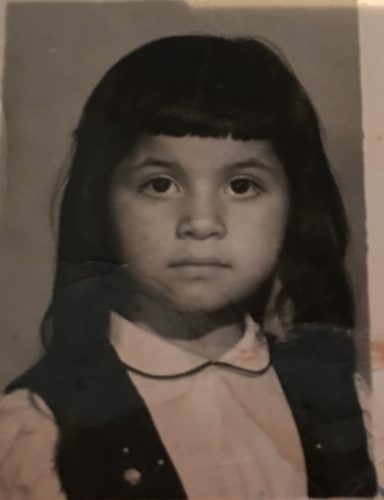
The following is a story of my first heartbreak.
The Valentine Card
She carefully sorted her Valentine cards, setting aside the one for her teacher. But there was one card unlike all the others — the one that read “Will you be my Valentine?” That card made her little heart patter with excitement. She was smitten by Joe, the smartest kid in her third-grade class. He was perfect in her eyes, and even his crowded front teeth made her smile.
No one in her family of eight knew that she had given her heart to Joe. How could they understand? Her four-year-old sister was too young to grasp such things. Her three brothers would tease her to the point of tears. And her two older sisters saw her as nothing more than a little child. The only person she could trust was her best friend Anita — petite, kind, and sweet — and only Anita knew just how much this little girl loved Joe.
The Big Day
It was Valentine’s Day — the day she would finally know if her true love would reciprocate. The bus ride to school seemed to take forever. All she could think about were the cards she and Joe would exchange. Her unspoken love was about to reach a new zenith, and that was a lot for an eight-year-old to carry.
When she walked into her classroom, she quietly took her seat toward the back of the room. They sat in alphabetical order, and as always, her seat was among the last ones. She wished her last name started with a P — like Joe’s — instead of a U.
All day long she waited. Through lunch. Through two recesses. Still waiting.
The art project that day was to make a holder for all the Valentine cards. She cut and pasted carefully — and the end product was perfect. Perfect for holding that one card from Joe.
The Broken Heart
Fifteen minutes before dismissal, the teacher announced it was time to exchange cards. The little girl’s eyes widened with excitement. She pulled out her brown bag full of Valentines, and you could hear the giggles as the children took turns handing them out.
Then it was Joe’s turn. As he made his way toward her, she put her head down. This was it. Now she would know how much he loved her.
The bell rang. It was time to go home. She held that one card tightly in her hand — and opened it. A kitten holding a heart. “You are sweet, Valentine.”
What? No. No. This was not happening.
She looked over at Anita. Anita was smiling — almost glowing. And there, in Anita’s petite little hands, was the very card she had set aside for Joe.
Joe loved Anita. Not her.
She wanted so badly to cry that it physically hurt — but she held herself together. The bus ride home was torture. And sitting right next to Anita made every mile worse.
Yes, this is my first memory of Valentine’s Day. I have no idea whatever became of Joe — but I remember that he broke my heart that day.
St. Valentine
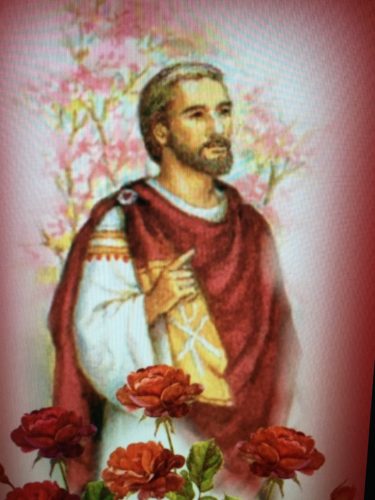
St. Valentine of Rome is the patron saint of love, young people, happy marriages, beekeepers, and epilepsy. Emperor Claudius II had him thrown in prison for marrying couples and professing his faith in Jesus. While he was imprisoned, he healed a jailer’s daughter of her blindness. And on the very day of his execution, he left that girl a card — signed simply, “Your Valentine.”
My Prayer
Dear Lord, bring all married couples into union with You. For those who are contemplating separation or divorce, heal their broken hearts and reconcile their differences. Amen.
Two Confessions
During COVID, there were two back-to-back confessions — and the story behind them is worth telling.
It had been announced that one of the parish’s regular priests was being transferred to another parish. Because of COVID, confessions were held in the open area of the church, with room dividers standing in for the privacy of the confessional.
Having gone to confession the day prior with Priest A, the decision was made to return the following day — not primarily to confess sins, but to thank Priest B, the priest who was leaving. There was no other way to express that gratitude. Everyone was keeping their distance, and the room dividers created the only real opportunity for a private moment.
As the dividers were being arranged, a careful eye watched to determine which priest had gone behind which partition. Priest B appeared to be behind one of them. From the back of the church, the line formed quickly — and the wait began.
This was not a confession of sins. It was a confession of gratitude.
The Same Sin
When the moment finally came, the familiar prayer was offered: Bless me, Father, for I have sinned. My last confession was yesterday. The room divider concealed the priest’s face — but not his voice. It was not Priest B. It was Priest A.
“You confessed these sins yesterday,” he said.
In a flash of panic, the reply came: “I know. I can’t get past them.”
It was a lie. Said in the confessional. To a priest.
Priest B was never found. The goodbye never happened. But the next morning, Mass came — and with it, Communion. And that small white lie, a venial sin born of embarrassment in the most sacred of spaces, was met with the mercy of Christ in the Eucharist.
The Pew Report
The numbers are sobering. According to Pew Research Center data, of self-identified Catholics, only 23% reported a sacramental confession at least once a year. Despite the Church’s requirement that Catholics go to confession at least once a year — with more frequent confession highly encouraged — polling has consistently shown that over half of U.S. Catholics go to confession either less than once a year or not at all.
This parish is a different story. The lines for confession speak for themselves. On the evening of February 23rd, with several priests hearing confessions, more than 100 souls came forward to receive the mercy of God in the Sacrament of Penance. That is not a statistic — that is a revival.
Finding Freedom
There is nothing more beautiful than walking out of the confessional absolved. The soul is purified. The mind is cleared. The weight that the Enemy had been carrying on behalf of the sinner is gone — and communion with Christ is restored.
So if you are Catholic: go to confession.
God already knows every failure. There is nothing hidden from Him — not one dark corner, not one shameful moment. But the Enemy knows them too, and he uses them differently. Where God offers mercy, the Enemy offers chains — whispering daily that the sin is too great, that it cannot be forgiven, that return is impossible.
It is a lie. Of those who go to confession regularly, about two-thirds report “a clear sense of forgiveness, reassurance of God’s mercy, and interior peace.” The God of the universe is not waiting to condemn — He is waiting to welcome.
This is what Lent is for: to look honestly within, to name what is there, and to purge the dust and shadows so that the soul can see the Son clearly once more.
My Prayer
Dear Lord, forgive the transgressions of Your children. Purify our souls and heal the deep wounds of our past sins. May we enter this Lent with full confidence in Your mercy and Your desire to restore us.
For those who have stayed away from the confessional, soften their hearts and free them. Remind them that You are not a judge waiting to condemn, but a Father running to meet them.
Free us all. Amen.