
The Day I Lost My Wallet

Paris (October 15, 2015)
Paris holds a population of roughly two million within the city proper, yet twelve million pour in daily to work — commuters filling every corner of one of the world’s great capitals. Only about half of Parisians own a vehicle, and for good reason: the cars are small, the streets are narrow, and the people themselves seem designed for elegance rather than excess. The French are famously slim. They wear beautiful, colorful coats and tie their scarves in those effortless, impossible twists that no tourist can quite replicate. The boots, the tights, the gloves, the hats — all of it deliberate, all of it polished. And they watch back. Just as the eyes follow them, their eyes follow the visitors just as intently.
Paris has been visited several times before — but this trip was different. Something had shifted on the streets. Where once the traffic was dominated by small, compact cars, suddenly there were SUVs and sleek, high-end sports cars occupying the narrow boulevards. These belong to a different Paris — one populated by transplants from the Middle East, staying in the five-star hotels, some of whom are said to own them. The Four Seasons George V, one of the most storied luxury hotels in the world, is reportedly owned by Middle Eastern royalty — a detail that makes the contrasts of modern Paris feel sharper than ever.
Only about half of French citizens own their apartments. Minimum rent in Paris runs roughly €1,200 per month, against an average salary of around €2,000. Of France’s 67 million citizens, a majority still identify as Catholic on paper — but only a fraction are practicing believers. A leading French religious magazine declared that France is “no longer a Catholic country” — and walking those streets, the weight of that statement is felt in the bones. The French have lost their way with God. The outcome is written all over the city they have built in His absence.
The Stinking Soup
France’s countryside is breathtaking — rolling hills, grazing cattle, and open meadows stretching to the horizon. The only interruption to the pastoral beauty is an unexpected one: nuclear cooling towers rising in the distance, sharing the landscape with the cows. France generates roughly 75–78% of its electricity from nuclear reactors — the highest share of any major nation in the world — and produces so much surplus that it exports power to neighboring countries, including Germany.
The first day in Paris was uneventful in the best possible way — settling in, surrendering to the nine-hour time difference, and letting the day dissolve at a gentle pace. By evening, a craving had taken hold: French onion soup. A small group set out on foot in search of a quaint café. The menu posted outside the door said the right thing. Everyone sat down and wasted no time ordering.
Care was taken to avoid any lost-in-translation moment. The waiter was asked directly and answered with confidence — the real thing, absolutely. The mouth was already anticipating it: a baguette buried under molten, charred cheese, oozing with fresh-cut onions from a proper French kitchen. As the waiter approached, the steam reached the nostrils first — and something was off. “French soup?” A nod, yes. “Yes, yes,” came the reply.
He was not wrong. It was cheesy soup. It was just goat cheese.
The first bite sent an urgent and unfriendly message to the brain. The second was worse. The gamey smell was overpowering; the taste was the single greatest food disappointment of the year. Natalie and her companion held out as long as dignity allowed — which was not very long. The bill was paid. They left.
The worst part came on the walk back to the hotel. The soup came with them — every belch of the way.
The Forbidden Metro Ride
Day two began with a meeting — Joanne, the group’s leader, collected everyone’s passports and delivered one firm instruction: no metro.
Four of them, including Father Leonard from EWTN, had their hearts set on Sacré-Cœur at Montmartre. A taxi fare was looked into. The number that came back — somewhere around €40–50 — was enough to kill that idea quickly. The metro, on the other hand, was less than €2. The earlier warning was weighed, set aside, and the decision was made: metro it was. Joanne would not be hearing about this.
Stepping onto that train, something unexpected happened — it felt completely natural. The Paris metro, for all its reputation, turned out to be effortless. The local feeling arrived almost immediately.
Sacré-Cœur Basilica
Sacré-Cœur Basilica crowns the hill of Montmartre with over two hundred steps leading up to its doors — and inside, something even more remarkable awaits. The Basilica has maintained Perpetual Adoration for over a hundred years without a single interruption. Perpetual Adoration refers to the continuous exposition of Jesus Christ in the Eucharist — twenty-four hours a day, seven days a week. It is a prayer of profound quiet, an act of love before the Real Presence, practiced by the faithful who simply come and stay awhile with the Lord.
The Basilica’s Grand Organ is in a class entirely its own. The sound is so sacred it seems to pierce straight through — the kind of music that makes the soul feel, just for a moment, as though it has already crossed into eternity. Prayers were offered for every intention brought from home. It was a most holy experience, and one not easily forgotten.
The Metro Passengers
Afterward, the group stopped for lattes and crepes filled with rich, dark chocolate — a proper Parisian interlude — before heading back toward the hotel. Metro tickets were purchased and handed out, and it was during that small transaction that things went sideways. Father Leonard had struck up a conversation with a local priest and was making introductions all around. In the distraction of the moment, the wallet was tucked away, the purse was zipped up, and everyone boarded.
At every stop, more passengers crowded in. Students loaded and unloaded at each station; the car became uncomfortably cramped, impossible to move through. As a cluster of French students exited, a voice called out for them to be careful. One young man turned back and, in a mocking tone, repeated the words back — a detail that would later seem rather suspicious.
The exit stop was nearly reached when the purse caught the eye — unzipped. A quick search through the bag turned up nothing. Father Leonard offered calm counsel: “Wait until we exit the metro to take a better look.” On a city bench outside, everything was unloaded from the handbag. Wallet — gone. Two credit cards, all the euros, all the American cash — gone. And it was only day two.
The purse had been zipped. That much was certain. Whether that sharp-tongued young man was the one who lifted it — only God knows.
Mike
A call had to be made — back home to Mike, to break the bad news. The cards needed to be canceled immediately. This was a Marian pilgrimage with a demanding itinerary of one-day stops across multiple cities, which made wiring money nearly impossible. There would be no quick fix.
The Dinner
Dinner that evening was most unpleasant — and not only because of the wallet. By this point, Joanne had gotten wind of the metro adventure. Every bite came with a well-earned reprimand. Even dessert was not spared the lecture. Father was sending encouraging texts from across the table, trying to lift the mood, but it wasn’t working.
Still — the incident did not touch the spiritual blessings of the day. Not for a moment. The only real sadness was the crystal rosary purchased in Lourdes. It had been in the wallet.
One Hundred Dollars
Father Leonard quietly produced a one-hundred-dollar bill — pressed into hand with a promise to be repaid once home. What followed was an unexpected complication: French banks and businesses were reluctant to accept large-denomination American bills due to concerns about counterfeits. A visit to a bank had to wait nearly a week.
Going without money — for someone who loves to shop — was a hard and humbling lesson. No rosaries. No holy medals. No shoes. Passing shoe store after shoe store without stopping. The temptation to ask someone for a loan flickered once or twice — and was immediately dismissed. A loan for something material? No. That line would not be crossed.
St. Catherine Labouré
The next stop was the Rue du Bac — home to the Chapel of the Daughters of Charity, where St. Catherine Labouré received some of the most consequential apparitions in modern Church history.
The Miraculous Medal owes its origin to Catherine Labouré, a member of the Daughters of Charity of St. Vincent de Paul, to whom the Blessed Virgin Mary appeared three separate times in 1830 at the motherhouse of the community in Paris. In each apparition, the Blessed Virgin appeared sitting in a chair, asking Catherine to have a medal struck honoring her Immaculate Conception. As a means to spread fervor, Our Lady told Catherine that a medal should be coined based on Catherine’s impression of one of the visions — in which Our Lady stood on a globe, holding in her hands another globe representing the entire world, France in particular, and every single person upon whom she would bestow grace.
To this humble, obscure Sister the Blessed Virgin appeared, made prophecies, and commissioned the making of the medal which soon came to be known as “miraculous” because of the favors wrought. St. Catherine Labouré lived a life of prayer and service to the poor and was canonized in 1947.
St. Catherine is also one of the Church’s incorruptibles — meaning that when her body was exhumed, it was found to be intact, showing no decomposition. Her incorrupt body remains today in the chapel in which she had the apparitions on the Rue du Bac. Her body rests on the right side of the main altar — a silent, luminous witness to everything she received and everything she kept hidden for decades out of pure humility.
Prayers were offered there for every intention carried from home. It was a most holy experience — the kind that does not leave a person the same.
The Meals
Without funds, packing became a necessity. Part of the complimentary breakfast was quietly set aside each morning for lunch — a practice the ministry had long made standard. Plastic bags come from home for exactly this purpose: not only to save money, but because the itinerary moves so quickly that stopping for a proper meal is often simply not an option.
The autoroutes of France offer a pleasant surprise for road-weary travelers. The rest stops along the highway are nothing like their American counterparts — they are well-equipped, clean, and stocked with genuinely fresh, tasty food. The lattes, in particular, are wonderful. Father Leonard, with characteristic generosity, treated to a latte at most of these stops. It was a small kindness that meant more than it might have otherwise — given the circumstances.
From Paris, the journey continued onward to Lisieux.
My Prayer
Dear Lord, thank You for Your wonderful provisions. Adapting to travel without funds was teaching dependence on You for everything. Amen.
A Canvas, Old City Jerusalem
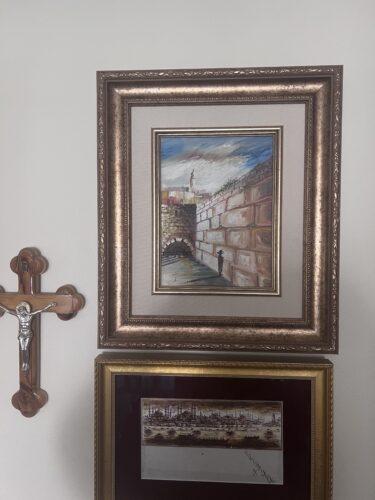
Psalm 37:4 New American Standard Bible
The Holy Land
Each year our ministry leader, Joanne, announced that we were going to the Holy Land; then her voice dropped, as she said, “This may be our last trip.” This statement always bothered me because of my secret obsession to purchase original artwork. How was I ever going to have enough money to pay for a painting?
How I managed to convince my husband Mike to give financial support for these missionary trips is still a mystery. His reaction was always the same because he worried about my overseas travels – not so much for my safety but of the expenses I would incur. Only through the providence of God was I able to make all these trips. Mike always supported my missionary efforts, but after the fifth trip to Israel, he took a different role. He decided that he would only pay for half of the expenses of the trip. How the rest of the money came together is somewhat of a conundrum.
Funding
I was employed but my position was more of a volunteer, teaching Bible studies at several public schools. On the last year of my employment, I earned a total of $600! I also tutored after school, and for years I had dedicated one day a week to watching my grandchildren, also receiving a stipend. I’ve been blessed to be surrounded by benevolent friends and family who graciously donated cash to help me pay for my trips. The money may come in at the last minute, but for us missionaries it always comes through.
The Guide
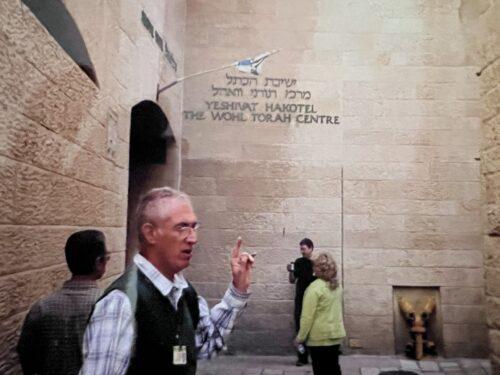
Part of our ministry was to carry the Cross down the Via Dolorosa in drama on Good Friday, so our travels were always during Holy Week. On this particular trip we were assigned a new tour guide, Dov, pronounced with a long O. Dov was a tall, slim Jewish man who left a lasting impression. Since we spent so much time with our guides, we got to know them pretty well. Dov was different, as his gentle mannerisms and kind words filled with knowledge of the Holy Land made him unusual, even unique.
Dov’s eyes revealed his pain, and it took several days for him to share that he had recently lost his son to suicide. His pain was raw, but he knew to place it on the shelf when he came to work. Our group was different because we were in one accord, we ate the same spiritual food, and Dov was safe with us. We were praying for God to give him and his wife special graces to get through their horrendous trial. We bonded because of his broken spirit, and our love filled his heart with hope. He was our physical guide but we were his spiritual balm to comfort.
Dov knew all the ins and outs of the Old City. We had just visited the Temple Institute, an organization that is dedicated to getting all the instruments prepared for the coming of the Jewish Messiah. Our team was in the gift shop when I asked Dov if he knew of any local artists. Dov said that he had a friend who was an artist, and that his gallery was within the Old City. I told Joanne that I wanted to go with Dov to the artist’s shop and her reply was to not take too long.
The Painting
For about half an hour, Dov and I ran through the worn cobblestones of the Old City, passing all types of different shops. I had never been to this section of the Old City, but we were focused on reaching the art studio of Dov’s friend, so there was no stopping us.
By the time we arrived in this section of the Jewish Quarter, I was winded. As I was catching my breath, Dov introduced his friend Eli Olayon. I looked around the art gallery until my eyes fixated on a beautiful painting of the Western Wall. I had a total of $200. We still had a few more days in Jerusalem, plus an extension to Turkey. I thought to myself, “I could sacrifice for this purchase and borrow a few dollars from other members of the team.” I picked up the painting and asked, “How much is this one?” Eli answered, “$500.” I quickly set it down and asked if he had anything similar. He pulled out a whimsical copy of a painting on thick paper. “This one is $45.” I took a deep breath of disappointment and said, “I’ll take it.”
God’s Favor
As he was rolling up the artwork to place into a tube, I told him that our ministry traveled to the Holy Land every year. I explained “For more than 30 years our team has been coming here.” Then Eli said, “Well if that is the case, why don’t you make payments on the painting that you really want? Give me your credit card and I will deduct $100 a month.” I looked over at Dov for approval. Dov looked surprised that I would question his friend’s integrity. I gave the stranger $100 cash, and much to my surprise, I agreed to the deal. I was in shock and felt so foolish that I handed over my credit card information to a total stranger. Again, Dov reassured me that his friend Eli was trustworthy.
When we returned to the group, it was well over an hour later. Joanne did not hold back about how inconsiderate my actions were. While she was berating me, her voice fell on deaf ears. All I could think about was that I had given a stranger my credit card information. I told no one in the group about my foolish venture, not because I was being discreet, but because I was afraid of their criticism as well.
Return To The United States
After I returned to the United States, I’d check my bank statements every morning for any unusual activity, but all was well. As per our arrangement, Eli was deducting the agreed amount.
Happy Father’s Day
Before the painting was paid off, I received a package from Israel. It was Eli’s painting! The first thing I did was thank God that Mike was not home. Otherwise I would have a lot of explaining to do.
So on Father’s Day Mike received a beautiful original painting by Eli Olayon with a rather lengthy explanation. And, as usual, Mike finished paying for the painting. He always does!
My Prayer
Dear Lord, I thank you for all the special graces You have bestowed on us. May we continue to seek You in every area of our lives. Lord, shed light into the hearts of those who live a life of darkness. Deliver those who are addicted to any substance abuse, fulfill the longing in their hearts. Dear Jesus, be with all who are affected by war, bring peace to the wars in Ukraine and Israel and to the hearts of all mankind. Amen.
Walking In the Steps of Jesus, Part Two
Good Friday
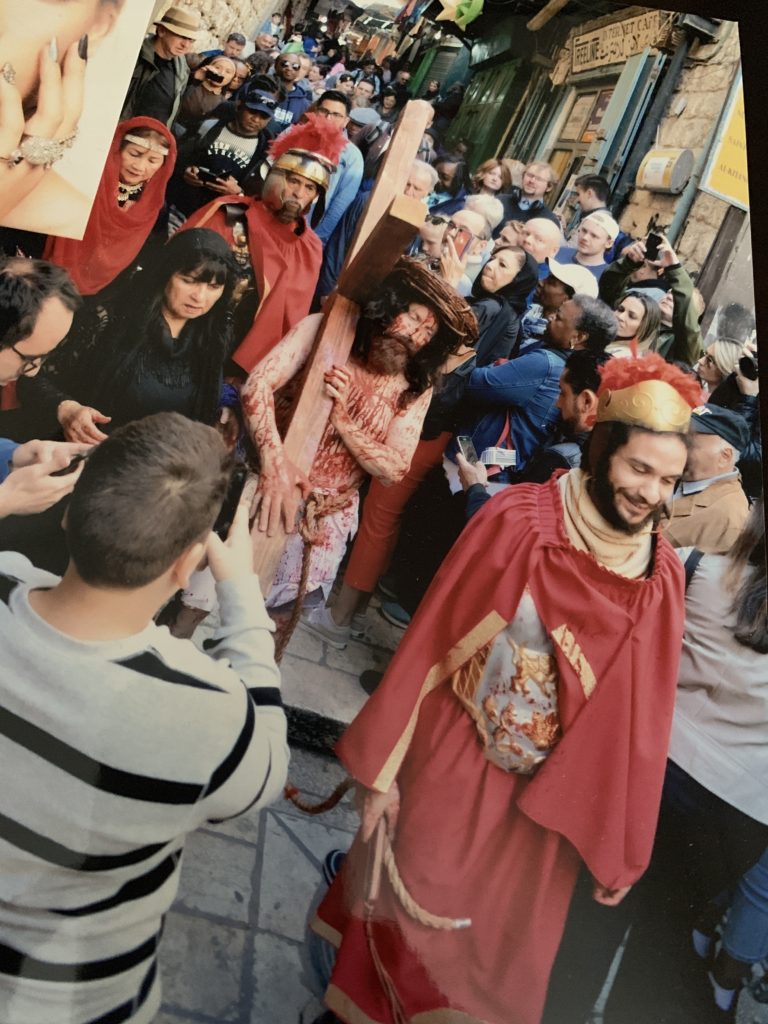
Edna, Robert (Roman soldier), Jim (Jesus), me and Danny (Roman soldier)
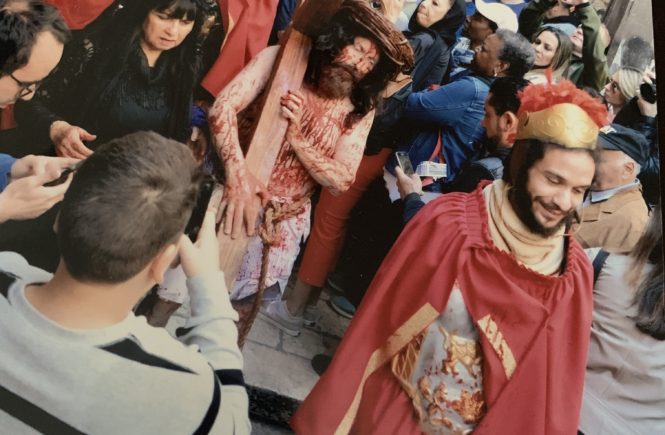
Good Friday is the reason we’ve been coming to Jerusalem for over 35 years. For the reenactment of the Carrying of the Cross, we all know our parts, with the exception of Danny, the newest team member. My part for the last ten years is to play our Blessed Mother Mary. On the third station, Jesus falls the first time, just a few steps away is where Jesus meets His Mother. My role, is to speak to her Son in great agony. Everything on the Via Dolorosa is to bring the attention to Jesus. Even though the Blessed Mother Mary is a part in the carrying of the Cross, the sole intention is for people to see what our Lord went through on the dreadful day. Jim has been playing the part of Jesus for several years. I am amazed at his transformation, and how Jim takes on the look and personifies our Lord with such grace.
The suitcase with our sound system was never recovered from the airline, so that meant that Pat and Linda had to sing a cappella. We all noticed one thing about carrrying the Cross this year. The pilgrims were cold in spirit and did not really react to what they witnessed. The Arabs are always indifferent to what we do, and they always react, some in disbelief, others in mocking us. It was unusual to experience the blank looks, with soulless eyes staring back at us. It was like the state the world is in today, cold and unyielding. Even the young man that we pulled from the crowd to play Simon of Cyrene could not stop taking selfies of himself while carrying the Cross; that was almost comical.
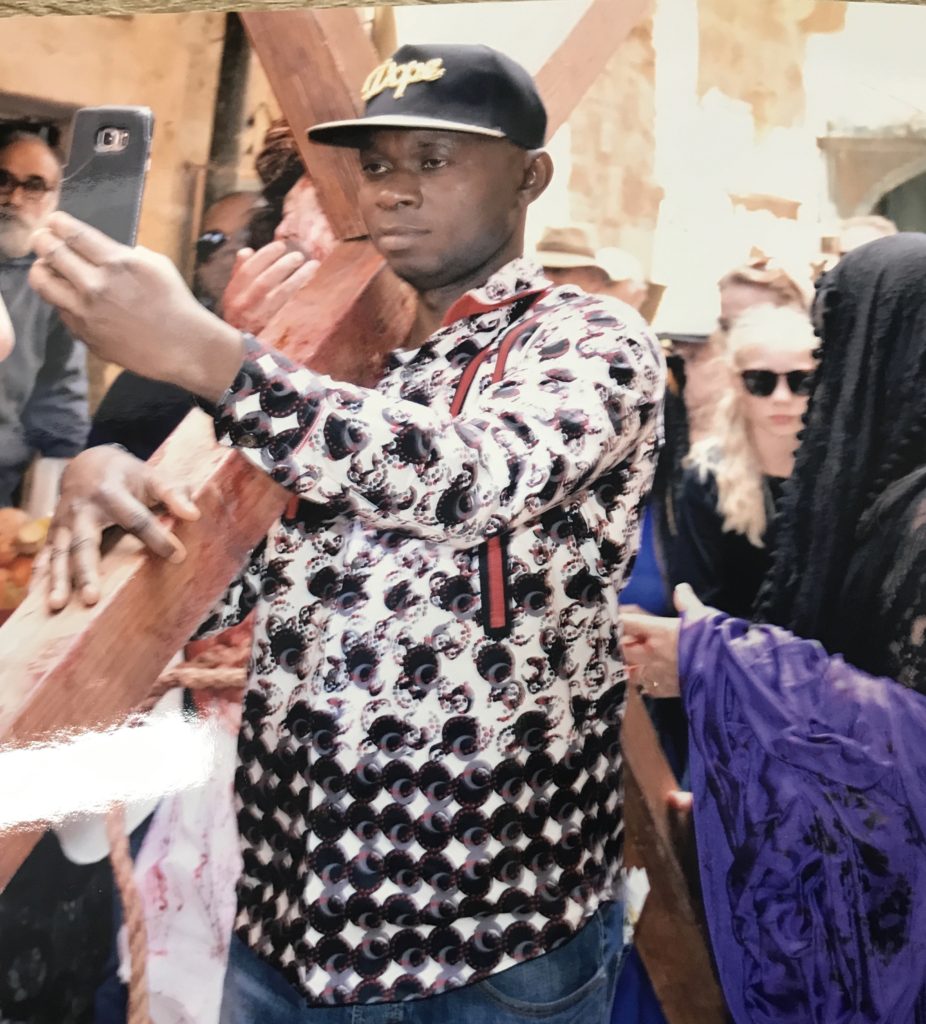
Simon of Syrene taking a selfie
Perhaps, time will tell the difference we made in persons’ lives. You can never get the image of Jesus out of your mind as He was beaten and made to carry His Cross. We all need to remember what He went through for us. We know that God blessed our effort, and if even a handful of people were touched, we accomplished our task. We plant the seed, and God does the watering. In the eyes of the Lord it only takes one person to be touched to make a difference. That person could be the next Billy Graham, or a holy priest.
After the pageant, as much as I wanted to go visit other holy sites, my body said no. All the sleepless hours took a toll on my being, and so much virtue put forth that it depleted my energy. For the first time I was able to get rest.
Holy Saturday
I have not mentioned Joanne, the spiritual leader of our group, because she had not been able to participate due to suffering from Meniere’s disease. She had to stay in bed for a large part of the trip. She always serves her purpose in interceding on our behalf and we could feel her prayers.
Bethlehem
We always make time in our schedule to visit the birthplace of Jesus. Bethlehem is almost all Muslim, and very few Christian’s remain in this town.
If you are purchasing any olive wood statues or anything made of olive wood, the best prices are in Bethlehem, and the merchants barter. Rarely can you walk away from the great deals, because they follow you until you cave in.
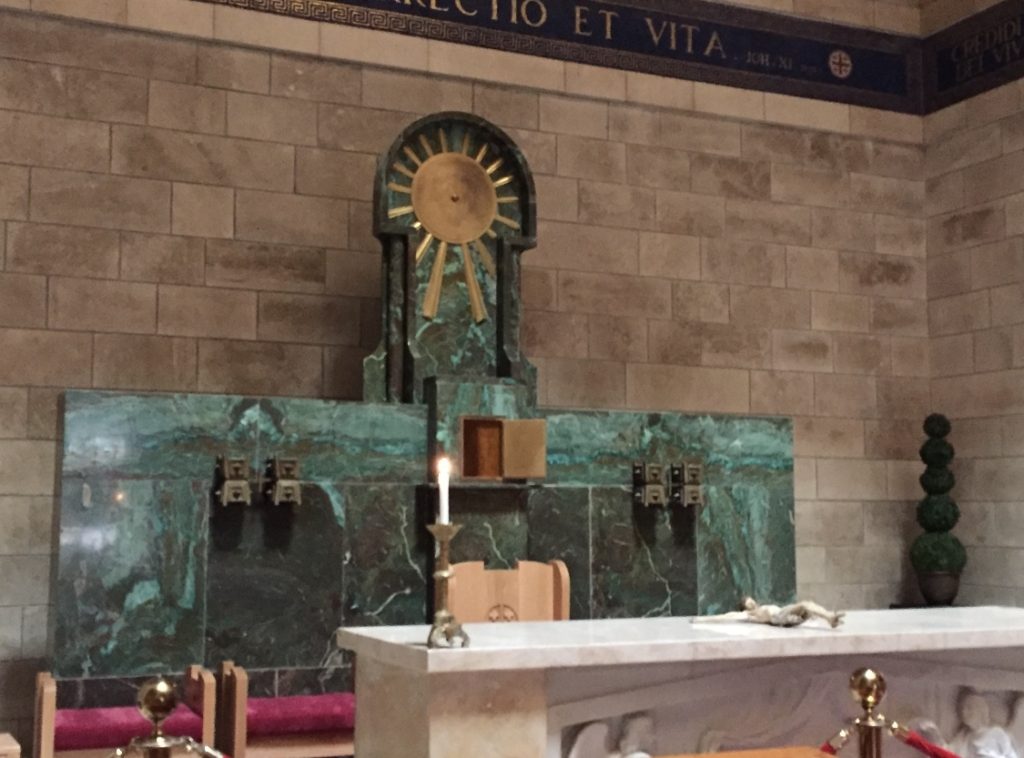
St. Lazarus Church in Bethany
The Church of the Nativity was jam-packed with pilgrims from all over the world. We waited over an hour to pray and touch the place where Jesus was born, for just a few seconds, I placed all your prayer requests there. Though we were rushed, I secured my spot on the only bench near the holy spot and continued with my petitions.
Bethany
Bethany, the town without pity, or a police force. It had been almost 6 years since we last visited Bethany. I had no phone to take any pictures, so what I took in with my eyes was an incredible decline in a society in anarchy. At the shops the cars are parked four deep, some parallel, some sideways, some back in, some left in the middle of the street. Cars are driven on both sides of the road. Cars are abandoned on the side of the road, and trash is also piled on the side of the road. The chaos is everywhere you look. Near the meat market were two tied up sheep, either for sale or for slaughter. Caged chickens were everywhere you turned. What broke my heart were the stray cats, as they were completely neglected, and pretty much all ravenous. I threw a piece of hard bread to one cat and it devoured it like it was delicious cat food.
Our only intention in Bethany is to visit the Church of St. Lazarus and his tomb. This church is stuck in the middle of this dysfunctional city and is the only saving grace of this community. The priest is African and when I spoke to him, he was forlorn. As the church was preparing for Easter Sunday service, I asked the priest how many parishioners he had. He answered, “Sadly, tomorrow maybe 15 to 20 people will be attending the service.” This was a great paradox; being assigned a church in the Holy Land with very few parishioners.
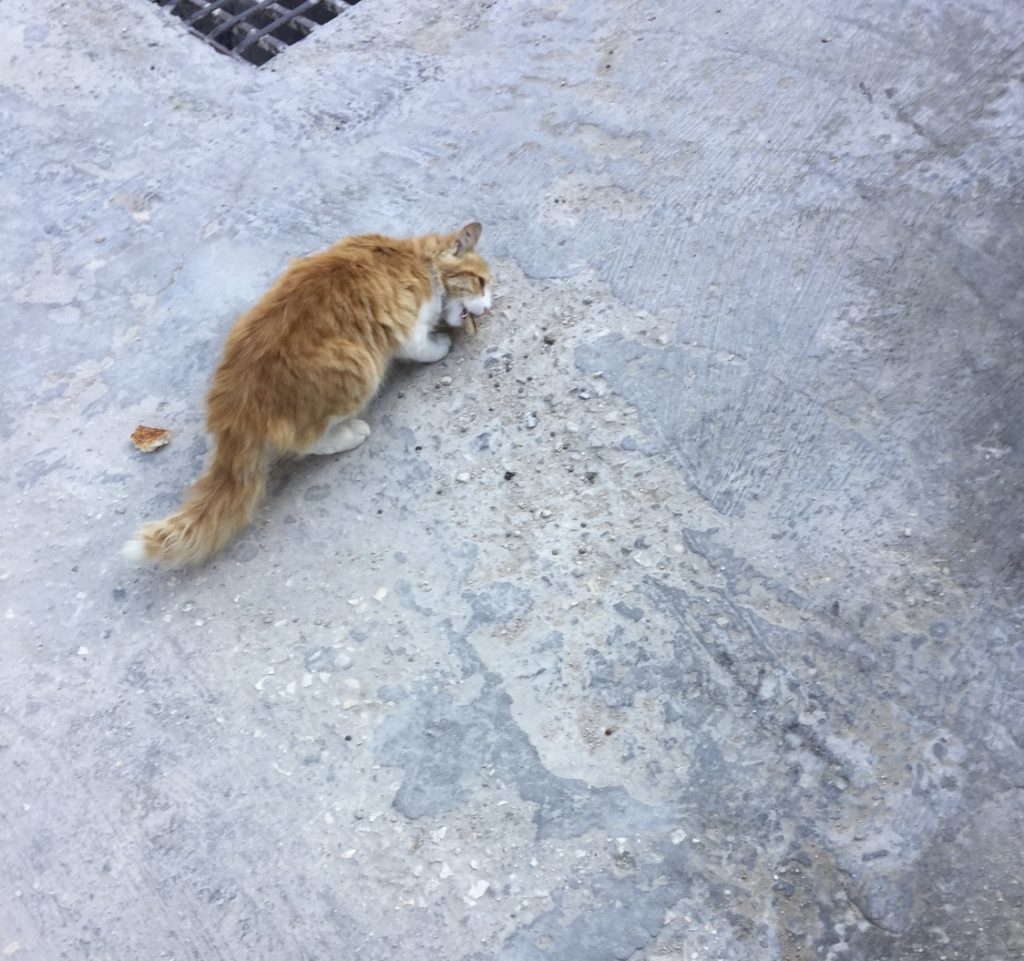
Bethany Cat
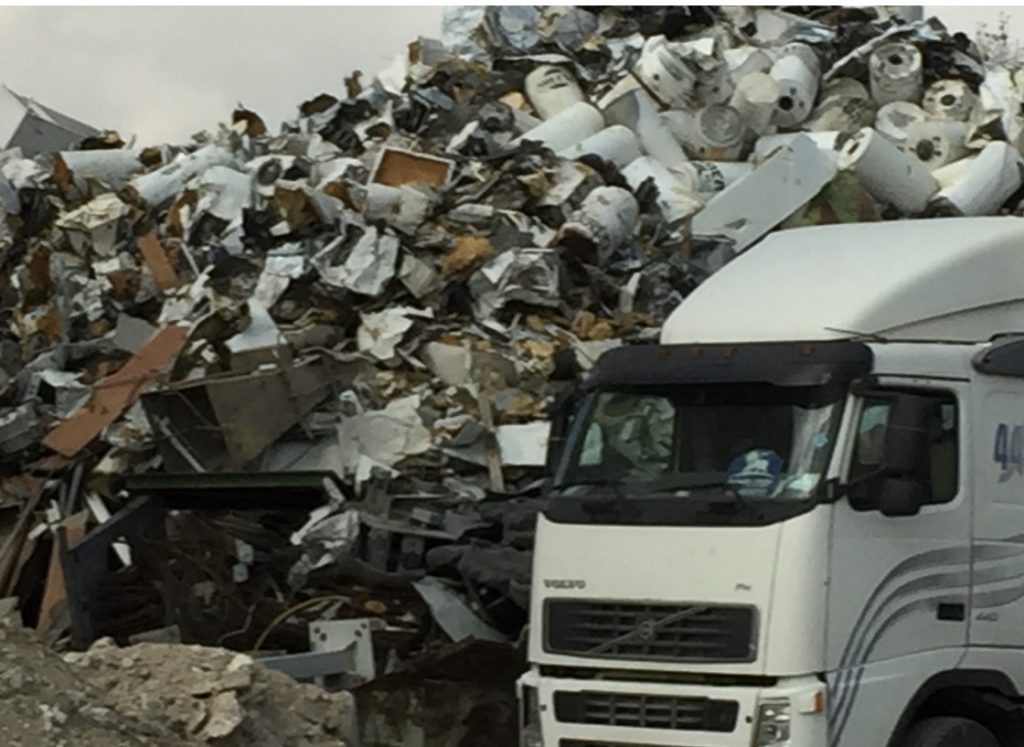
Bethany
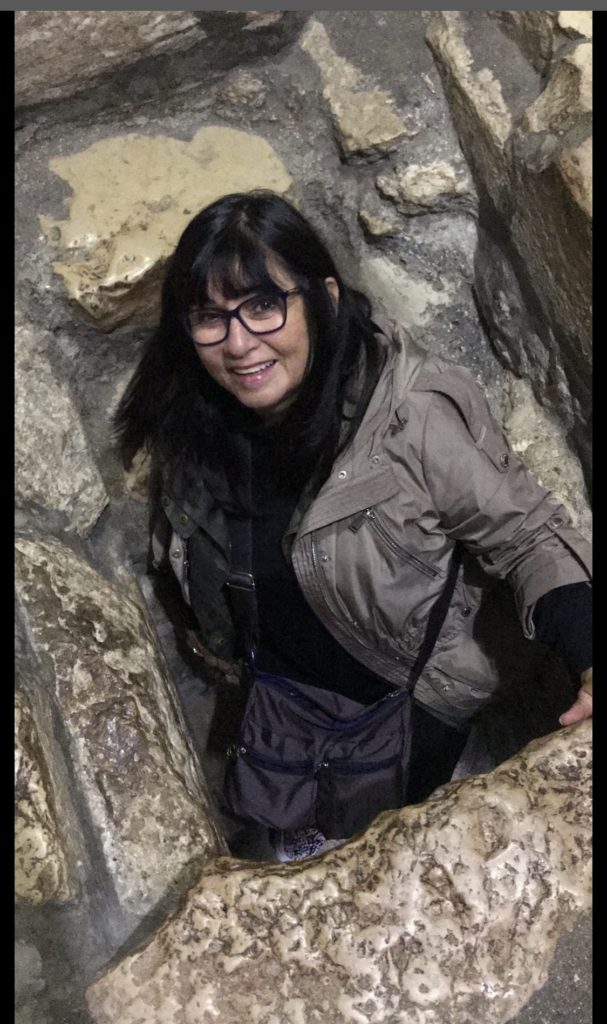
After praying in the beautiful church we headed to Lazarus’s Tomb. I’d forgotten how cumbersome and steep the steps that you have to climb down to to get to the tomb were. At the bottom of the steps is a rather small opening to go into the actual tomb. For some strange reason it felt smaller than the last time I was there. It was a little like a Winnie-the-Pooh moment, making my way the bottom. We had the tomb all to ourselves, and we bombarded heaven with prayers for those in bondage; it was powerful!
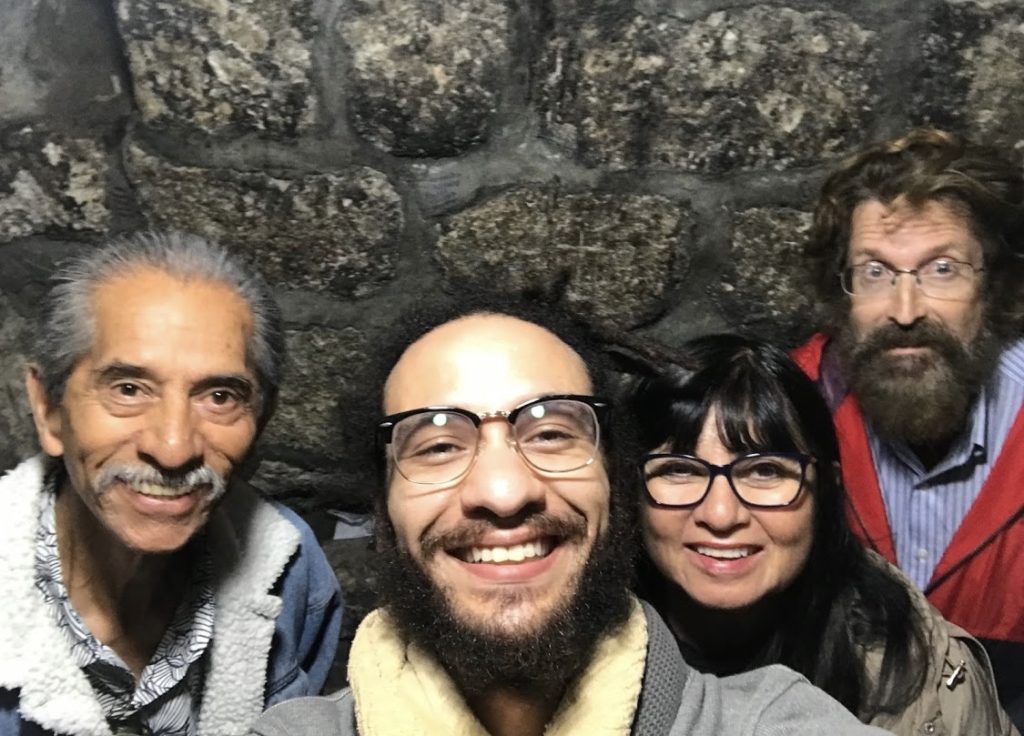
Robert, Danny, me and Jim, inside the tomb of Lazarus
By the time we got back it was dinner time, and we still needed to pack the medicine for the poor. With the aid of angels we mustered enough strength to complete the task of making 25 bags for the poor.
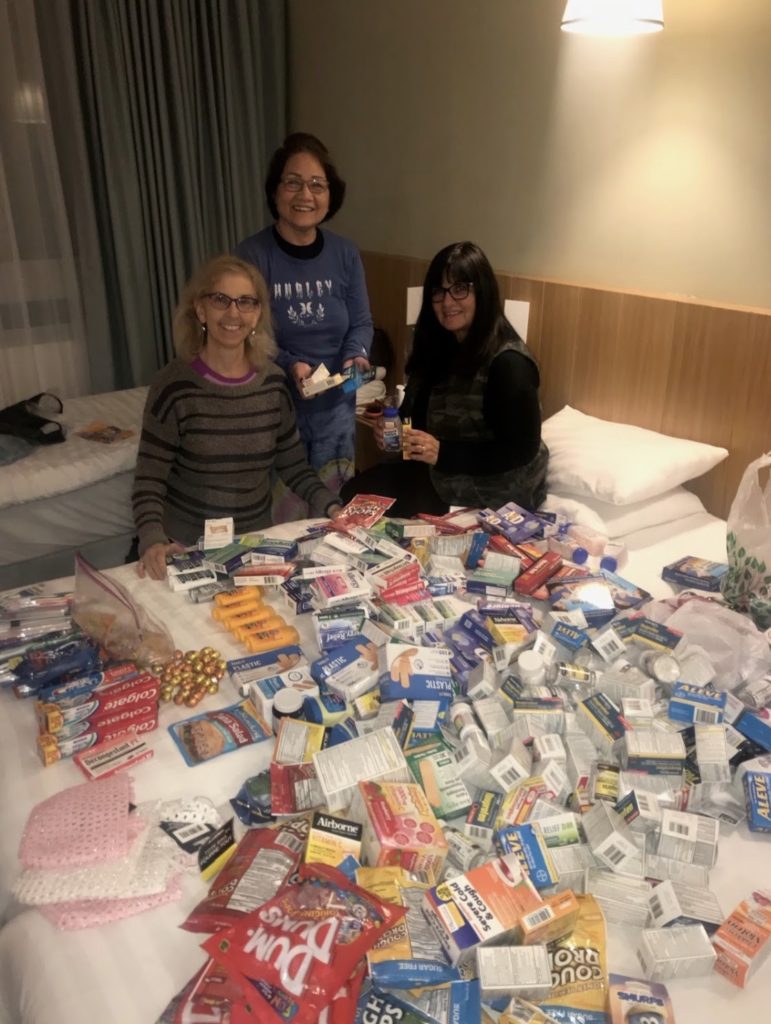
Pat, Edna,and me, Packing medicines
Easter Sunday
When we checked the weather we knew we were in for some rain. Part of my sole purpose in life was to attend an Easter service at the Church of the Holy Sepulcher. Not one person could give us a schedule; even the Internet could not really pinpoint a time for the services. It seemed that the main service was a midnight Mass, which I was not interested in attending.
When we arrived in the courtyard of the church it was packed. What seemed to be a line was more of a serpentine formation leading in many directions. We made our way and waited, and waited for the doors to open. The sky poured out some light rain, and then some hail. It was cold enough to wear gloves and scarves. Most of us were equipped with unbrellas, but mine kept hitting people, and as many times as I apologized, it would happen again. Finally I handed the umbrella to a tall stranger, and the problem was solved.
After 2 hours the doors opened. I was smack in the middle of a herd of wild buffalo moving in slow motion to get to the door. So many people pushing and shoving their way in. All I could recall was that I remembered there was a step at the entrance of the door, and I wanted to be sure that I did not miss it, or for sure I was going to be trampled. The crowd was so thick that I could not see my feet. I’m happy to report that we all made into the church. We walked in only to discover more crowds and more lines. We prayed at the Stone of Unction (where Jesus’s body was placed after the Crucifixion) and I left the remainder of the prayer requests. I was gateful for the experience of celebrating Easter in the Holy Land, and especially at the Church of the Holy Sepulcher.